




Key Findings
- A website strategy should be defined before design or development begins.
- Business goals determine which user actions and pages deserve priority.
- Audience research should influence messaging, structure, and content decisions.
- Design should translate strategic priorities into clear and usable user journeys.
- Website launch begins the optimization cycle rather than completing the strategy.
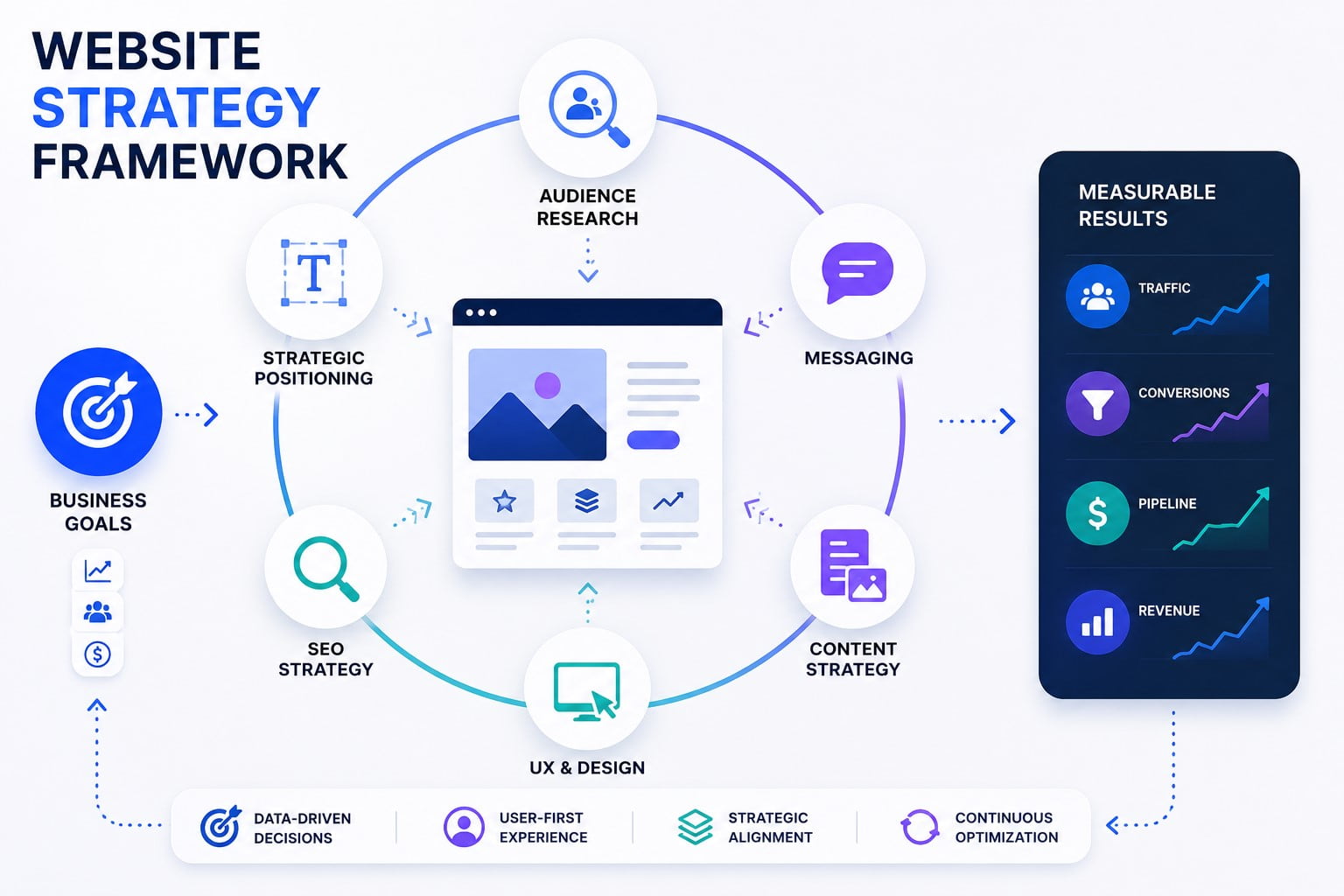
A website strategy is a structured plan that defines how a website will achieve business objectives while meeting user needs. It combines audience research with content and structural planning. SEO and design decisions follow that foundation. Instead of treating a website as a collection of pages, a strategy connects every decision to measurable outcomes.
Many websites look modern yet struggle to generate qualified leads or support business growth because they were designed before their purpose was clearly defined. A strategic approach replaces assumptions with evidence, helping businesses prioritize the right content, organize information effectively, and create user experiences that encourage meaningful actions. Throughout this guide, you’ll learn how to create a website strategy that supports both users and long-term business success.
What Is a Website Strategy?
A website strategy defines the site’s purpose, audience, content direction, and expected user actions. It establishes direction before design or development begins. Every page should support clear and measurable business objectives.
Core Elements
The core elements of a website strategy include:
- Business goals that define success.
- Audience insights that guide decisions.
- Messaging that communicates clear value.
- Content priorities that support user needs.
- Site structure that simplifies navigation.
- Design principles that encourage action.
These elements should work as one connected system. Business goals shape research, while audience insights influence messaging. Content priorities then guide structure, design, and future development.
| Website Strategy Component | Primary Purpose | Business Impact |
| Business goals | Define success | Aligns website with company objectives |
| Audience research | Understand users | Improves relevance and engagement |
| Content planning | Deliver useful information | Supports customer journeys |
| SEO structure | Improve discoverability | Increases organic visibility |
| UX and design | Guide user actions | Improves conversions |
Thinking about these components separately often creates disconnected experiences. Visitors may find useful content but struggle to navigate the website, or they may enjoy an attractive interface without understanding the company’s value. A unified plan prevents these gaps by connecting every decision before production begins.
This planning process also reduces expensive revisions during development. Teams can validate priorities before investing in design or engineering work. As a result, projects stay focused on measurable outcomes rather than personal preferences.
Why Every Successful Website Starts with a Clear Strategy
Every successful website begins with a clear strategy because planning determines how effectively the final product supports business objectives. Without a roadmap, design decisions become subjective, content loses direction, and users encounter inconsistent experiences.
McKinsey’s experience-led growth research highlights the connection between clear goals and stronger customer journeys. Businesses should decide what visitors need to know first, why they should trust the brand, and which actions matter most before creating pages or layouts.
A strong strategy helps teams:
- Prioritize the most valuable user actions.
- Organize information around customer needs.
- Keep messaging consistent across every page.
- Reduce unnecessary design revisions.
- Support measurable business outcomes.
Strategy-first planning also improves collaboration. Marketing teams understand which messages deserve emphasis. Designers know which actions require visual priority. Developers receive clearer technical requirements instead of interpreting changing opinions.
A documented website planning strategy also improves resource allocation because it identifies problems before production begins. Teams can then define website performance goals that measure meaningful business outcomes instead of isolated metrics.
Document these decisions before production begins:
- The primary audience for each key page.
- The main action each page should encourage.
- The proof needed to support important claims.
- The content owner responsible for every section.
- The technical requirements affecting design choices.
- The approval process for strategic changes.
How to Build a Website Strategy Step by Step
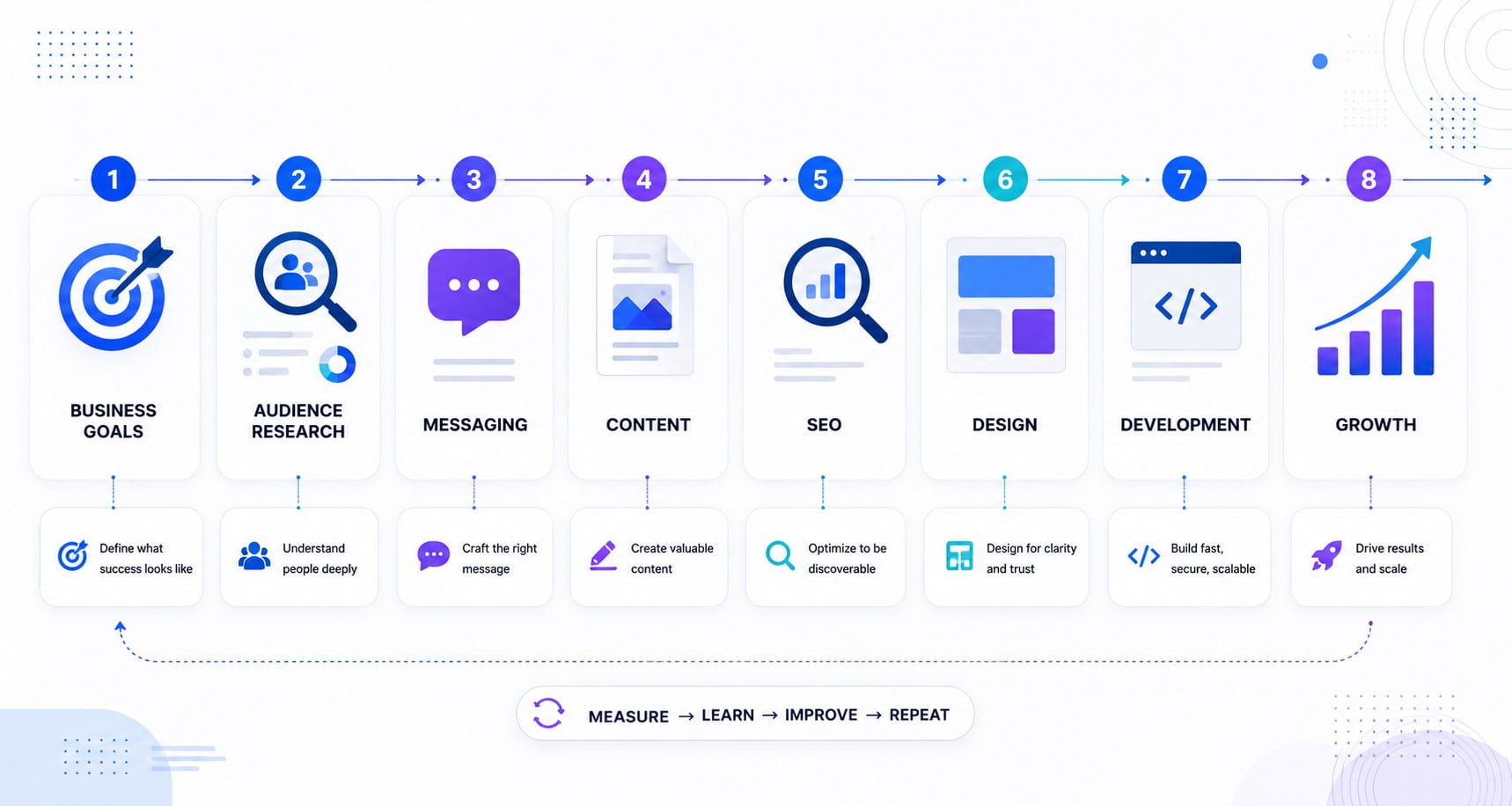
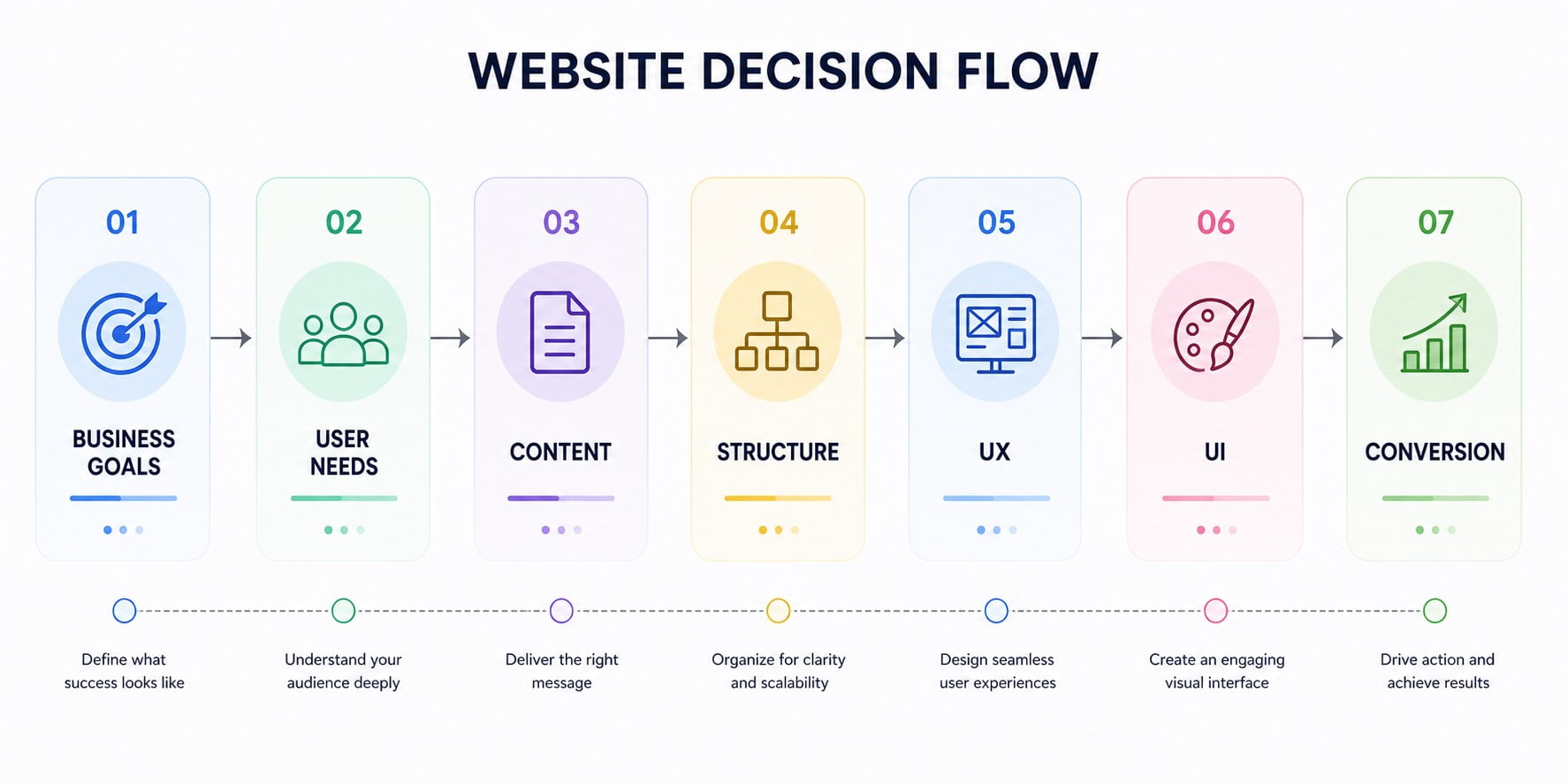
Building an effective strategy means making decisions in the right order. Every stage influences the next one, so skipping research or planning usually creates problems that are expensive to fix later. The process below helps businesses connect strategic thinking with practical implementation.
Define Your Website Goals
Every plan should begin with clear goals because objectives determine every later decision. They influence content priorities, navigation, user journeys, and conversion paths. Without measurable goals, teams often evaluate success based on personal opinions instead of business outcomes.
Well-defined website goals should be:
- Specific enough to guide design decisions.
- Measurable through meaningful business metrics.
- Realistic within available resources and timelines.
- Relevant to broader business priorities.
- Time-bound to support regular performance reviews.
Website goals should always support broader organizational priorities. A company focused on lead generation needs different pages than a business emphasizing customer support or product education. Strategic alignment prevents websites from becoming attractive digital brochures with little commercial value.
The most effective goals describe user behavior instead of design preferences. Rather than aiming for a modern homepage, define the actions visitors should complete after arriving. This approach makes future optimization significantly easier.
| Business Objective | Website Goal | Primary KPI |
| Generate leads | Increase qualified inquiries | Form submissions |
| Sell products | Improve online sales | Conversion rate |
| Build awareness | Increase qualified traffic | Organic sessions |
| Support customers | Reduce support requests | Self-service usage |
Goals should also establish website success metrics before design begins. Measuring performance after launch is useful only when success criteria already exist. Otherwise, teams collect data without understanding whether the website is actually supporting the business.
Understand Your Target Audience
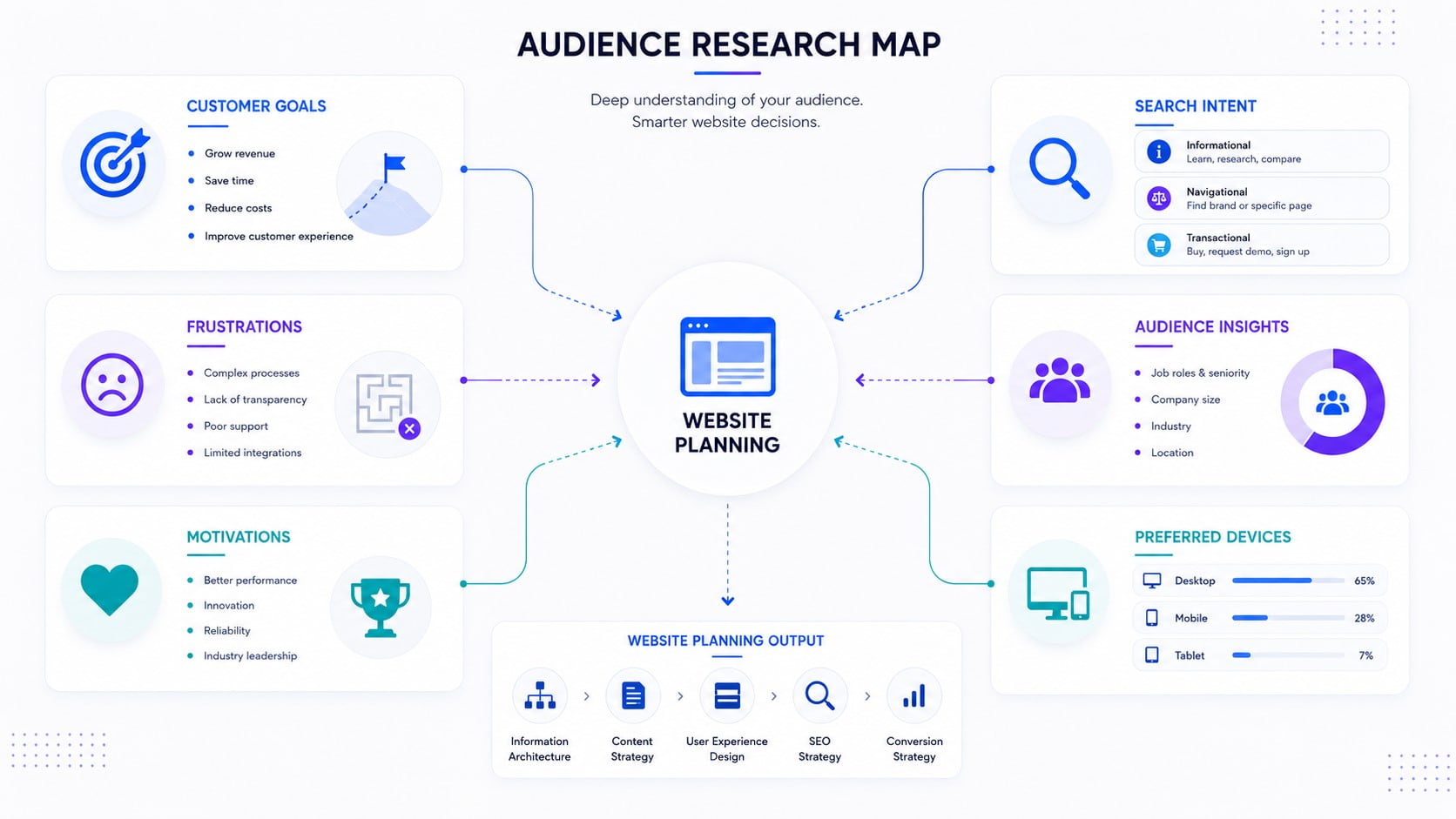
Understanding users transforms assumptions into informed decisions. Strong audience research explains why visitors arrive, what information they expect, and which obstacles prevent them from taking action. These insights make every later stage of the strategy more effective.
Many businesses describe their audience using demographic information alone. Age or location rarely explains how people evaluate solutions or why they leave a website.
Before creating navigation or page layouts, collect information such as:
- Primary customer problems.
- Purchase motivations.
- Common objections.
- Frequently asked questions.
- Preferred devices.
- Search behavior.
These findings should influence navigation, messaging, and page hierarchy instead of remaining isolated inside marketing documents. Applying user-centered design principles early helps teams create experiences based on evidence rather than assumptions.
Customer interviews often reveal opportunities that analytics cannot explain. Search data identifies what people look for, while interviews explain why they search in the first place. Combining both methods creates a stronger digital strategy for a website that reflects actual customer expectations instead of internal assumptions.
Turn audience insights into website decisions by:
- Reordering pages around the most urgent customer needs.
- Moving critical proof closer to high-intent actions.
- Simplifying terminology that customers rarely use themselves.
- Removing steps that do not support a clear user task.
- Prioritizing content for the devices customers use most.
- Testing uncertain assumptions before full development begins.
Research Competitors and Identify Opportunities
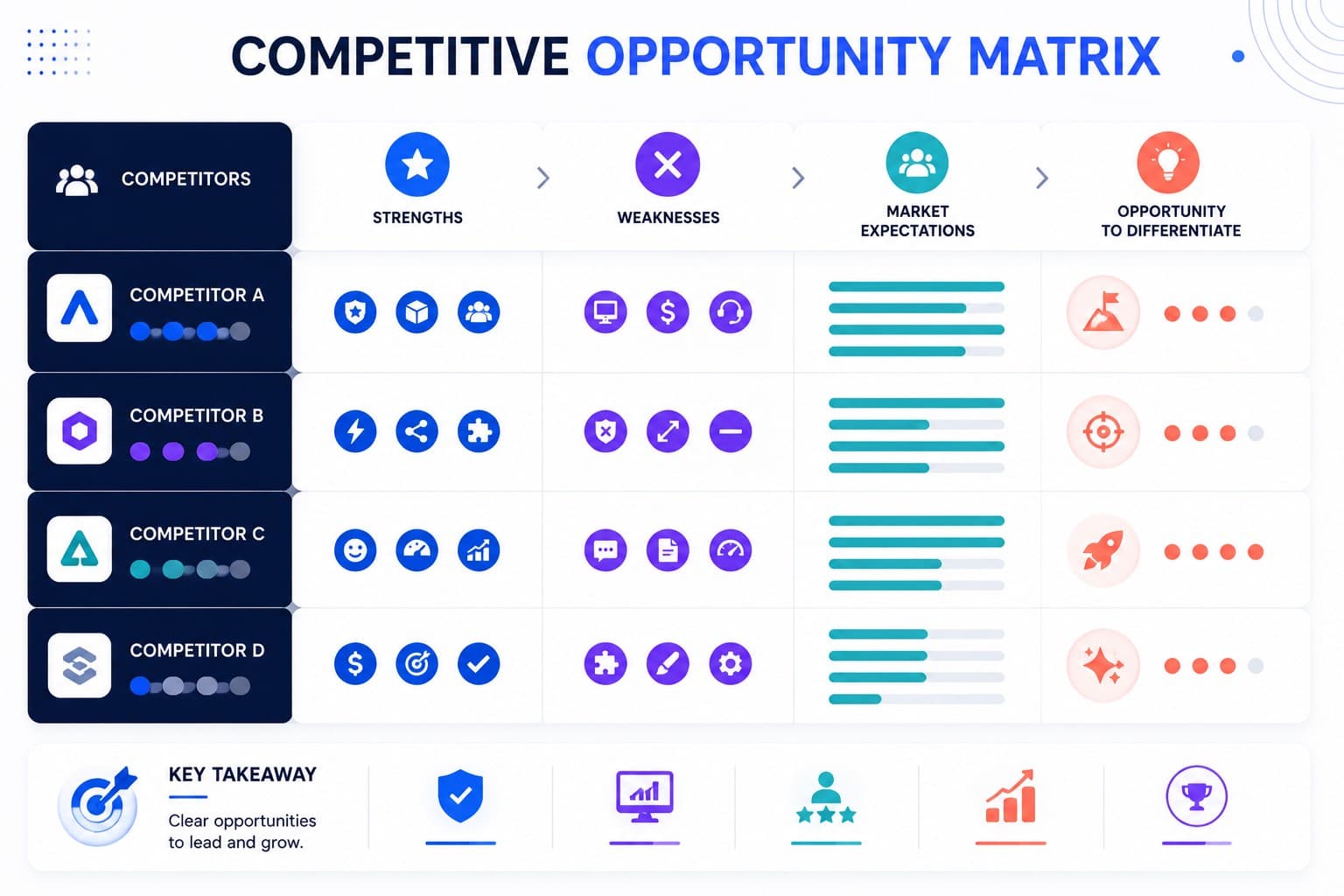
Competitor research should identify opportunities rather than encourage imitation. The purpose is to understand market expectations, discover content gaps, and recognize patterns that influence customer decisions. Copying another company’s website rarely creates competitive advantage because every business serves different audiences and objectives.
Review competitor websites from several perspectives. Evaluate how they communicate value, organize information, guide visitors through important actions, and support trust. Strong research explains why certain approaches work instead of simply documenting visual differences.
A practical competitor review should answer these questions:
| Evaluate | Why It Matters | Warning Sign |
| Value proposition | Shows positioning | Generic messaging |
| Navigation | Improves usability | Complex menu structures |
| Content depth | Supports decisions | Thin informational pages |
| Calls to action | Encourages conversions | Confusing user journeys |
Competitor analysis should also identify opportunities they overlook. Some websites answer product questions effectively but provide little educational content. Others invest heavily in design while making important information difficult to find. These gaps often become the strongest opportunities for differentiation.
Research should finish with documented recommendations rather than screenshots. Teams need actionable conclusions explaining which ideas deserve adoption and which should be avoided. That disciplined approach creates a stronger strategic approach to website creation than simply collecting design inspiration.
Book a Call
Shape Your Core Message and Value Proposition
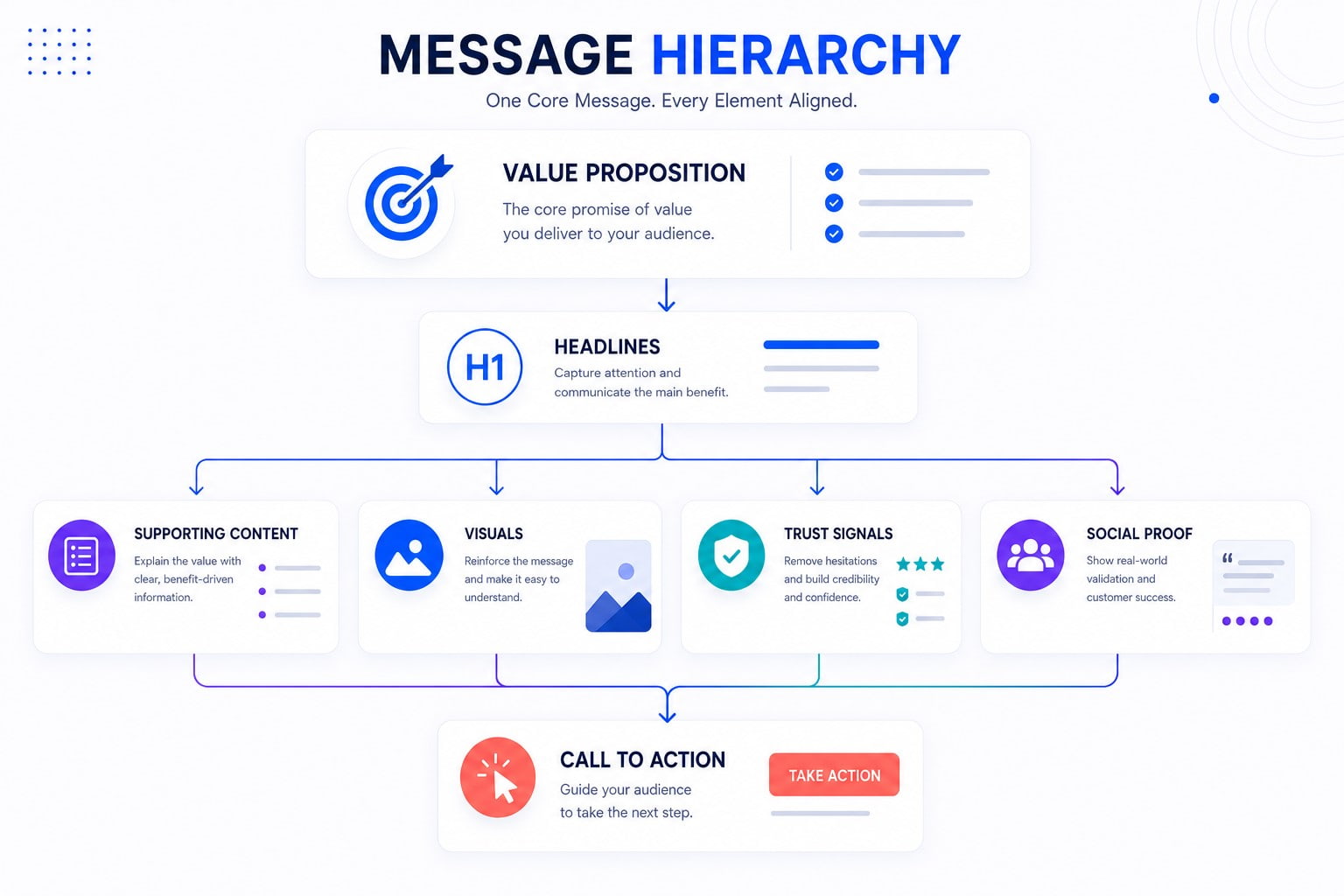
Every successful website communicates value before describing features. Visitors should understand what the business offers, who it serves, and why it differs from alternatives within the first moments of arriving on the website. Delayed messaging often increases bounce rates because users cannot quickly determine whether the website matches their needs.
Strong value propositions focus on customer outcomes rather than company achievements. Instead of emphasizing internal capabilities, explain how products or services solve practical problems. Clear messaging reduces uncertainty and encourages visitors to continue exploring the website.
A useful framework includes three simple questions:
| Question | Purpose |
| What problem do you solve? | Establish relevance |
| Why are you different? | Demonstrate competitive value |
| Why should users act now? | Encourage meaningful action |
Consistency matters as much as clarity. Headlines, supporting copy, visuals, and calls to action should reinforce the same central message throughout the website. Contradictory messaging weakens trust and creates unnecessary confusion during the customer journey.
Businesses should also align website design with business objectives by ensuring visual hierarchy supports the value proposition instead of competing with it. Visitors should immediately recognize the website’s primary purpose before evaluating additional information.
Build an SEO-Friendly Website Structure
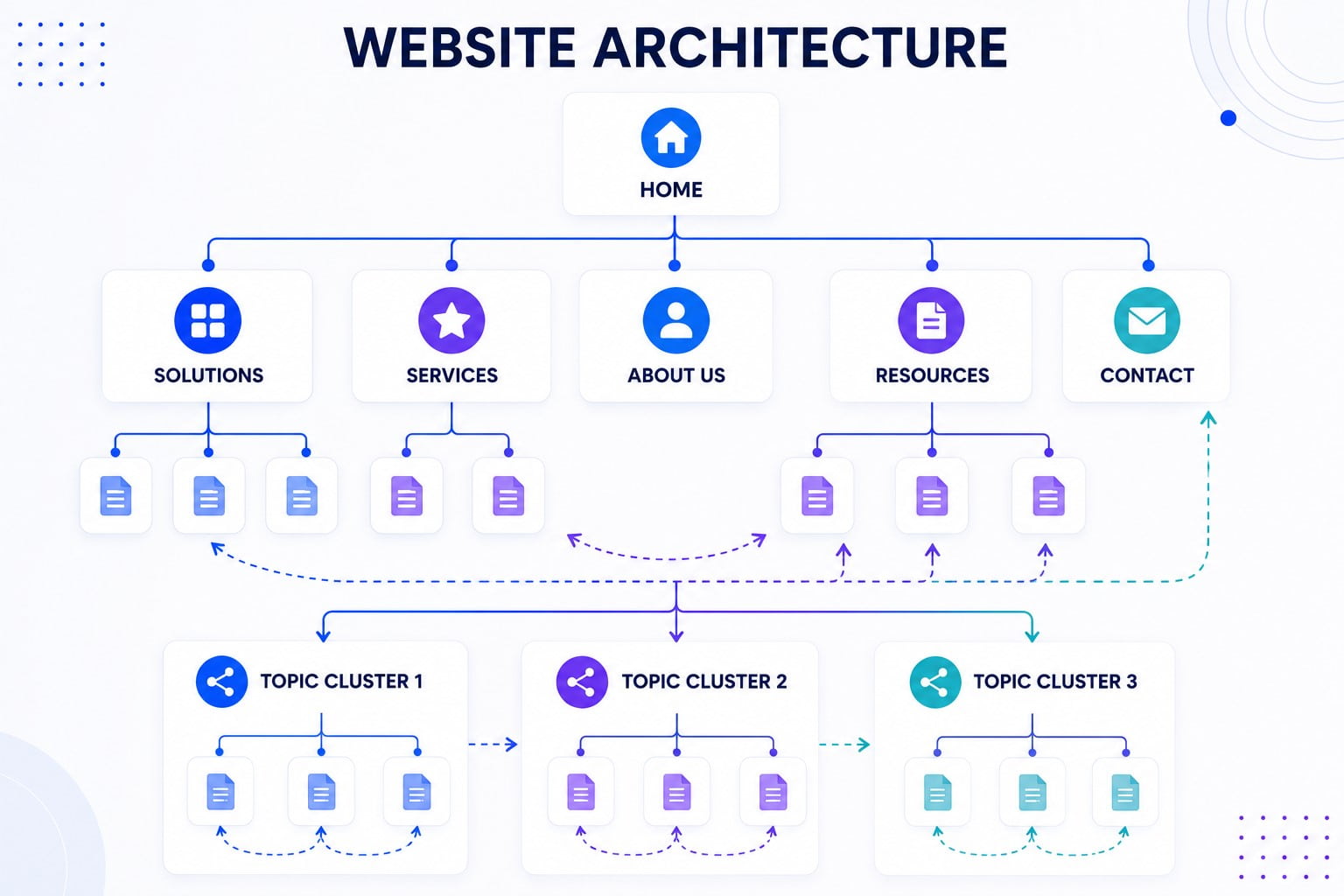
An SEO-friendly website begins with information architecture rather than keywords. A logical structure helps visitors find information quickly while making it easier for search engines to understand page relationships. Planning these elements before development prevents unnecessary restructuring after launch.
Every page should have a clear purpose within the website hierarchy. Primary navigation should guide users toward the most important information without forcing unnecessary clicks. Supporting pages should reinforce broader topics instead of competing with them.
| Planning Decision | Benefit for Users | SEO Benefit |
| Logical page hierarchy | Easier navigation | Better crawling |
| Descriptive URLs | Clear expectations | Stronger relevance |
| Internal linking | Faster content discovery | Improved topical authority |
| Topic-based page groups | Better user journeys | Stronger semantic relationships |
Nielsen Norman Group distinguishes information architecture from the navigation users see. Information architecture defines how content is organized, while navigation represents the interface people use to move through that structure. Designing navigation before organizing information often produces confusing user experiences.
Businesses should also document their website design process before creating wireframes. A structured planning workflow reduces revisions and ensures every design decision supports user goals rather than personal preferences.
Develop a Content Strategy
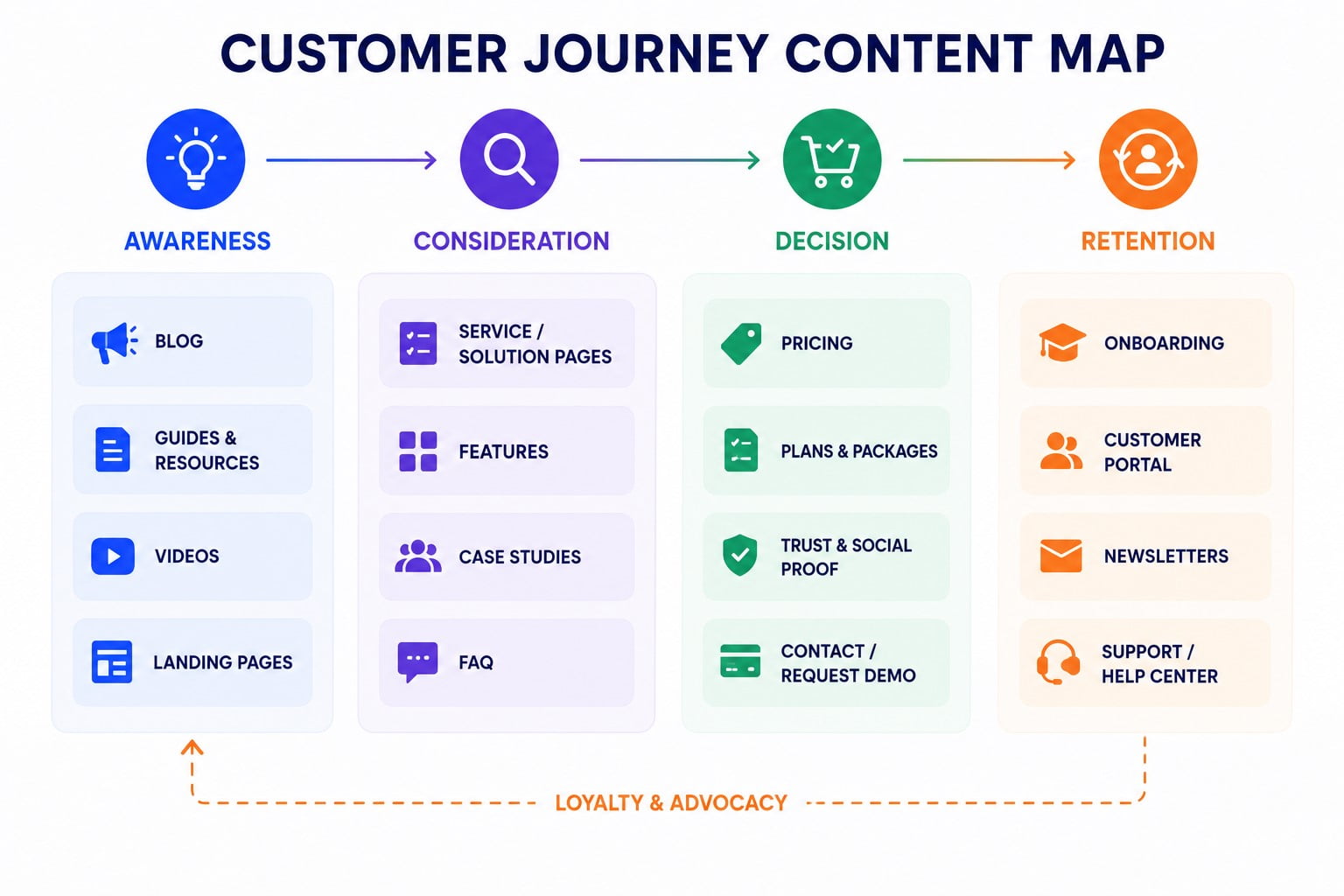
A content plan gives every page a clear purpose within the overall strategy. Instead of publishing information simply because competitors do, businesses should prioritize content that answers user questions and supports business objectives at each stage of the customer journey.
Different pages serve different purposes. Landing pages encourage conversions, educational resources answer questions, and service pages reduce uncertainty before purchasing decisions. Mapping content to visitor intent creates stronger experiences than organizing pages around internal departments.
| Page Type | Primary User Intent | Content Priority |
| Homepage | Understand the business | Value proposition |
| Service page | Evaluate solutions | Benefits and proof |
| About page | Build trust | Expertise and credibility |
| Blog | Learn | Educational content |
| Contact page | Take action | Clear next steps |
Content planning should also anticipate future growth. Businesses often add new services, publish additional resources, or expand into different markets. A flexible content framework makes those changes easier without disrupting the original website strategy.
Content audits should become part of regular maintenance rather than occasional projects. Reviewing outdated information, improving internal links, and updating examples helps improve website performance over time while preserving existing search visibility.
Create a User-Focused Website Design
Design should communicate strategy instead of competing with it. Every layout and interaction should support goals established during planning. Attractive interfaces cannot compensate for unclear messaging or weak information architecture.
Visitors make decisions quickly. Visual hierarchy should highlight essential information before encouraging action. Consistent spacing and readable typography also reduce cognitive effort.
A user-focused design should:
- Guide attention toward important content.
- Keep navigation predictable across pages.
- Support accessibility from the beginning.
- Reinforce the value proposition visually.
- Make primary actions easy to complete.
Baymard Institute’s Ecommerce research shows how unclear navigation can make site structure harder to understand. Simpler systems improve confidence and help users complete tasks efficiently.
Strong design also connects business objectives with user expectations. Layouts should support content priorities without creating unnecessary distractions. This turns strategy into a practical experience instead of a static document.
Businesses preparing to launch a new website should validate key journeys before development finishes. Early testing reduces expensive revisions after release.
From Launch to Growth: How to Evolve Your Website Strategy
A website strategy should continue evolving after launch because user behavior, business priorities, and search expectations change over time. Launching a website marks the beginning of optimization rather than the end of planning. Continuous improvement helps businesses protect their investment while creating better experiences for visitors.
Performance reviews should focus on meaningful outcomes instead of isolated metrics. High traffic has limited value if visitors fail to complete important actions. Monitoring website performance goals alongside user behavior provides a more accurate picture of overall success.
Businesses should regularly review:
- User journeys and conversion paths.
- Content performance.
- Search visibility.
- Technical website health.
- Navigation and usability.
- Customer feedback.
Behavioral analytics often reveal opportunities that traditional reports overlook. Visitors may repeatedly abandon a particular page, ignore important calls to action, or struggle to locate key information. These patterns should guide future improvements instead of relying on assumptions.
Regular content updates also strengthen long-term performance. New customer questions, product changes, and industry developments create opportunities to improve existing pages. Updating valuable content usually delivers better results than continually publishing new material without maintaining earlier resources.
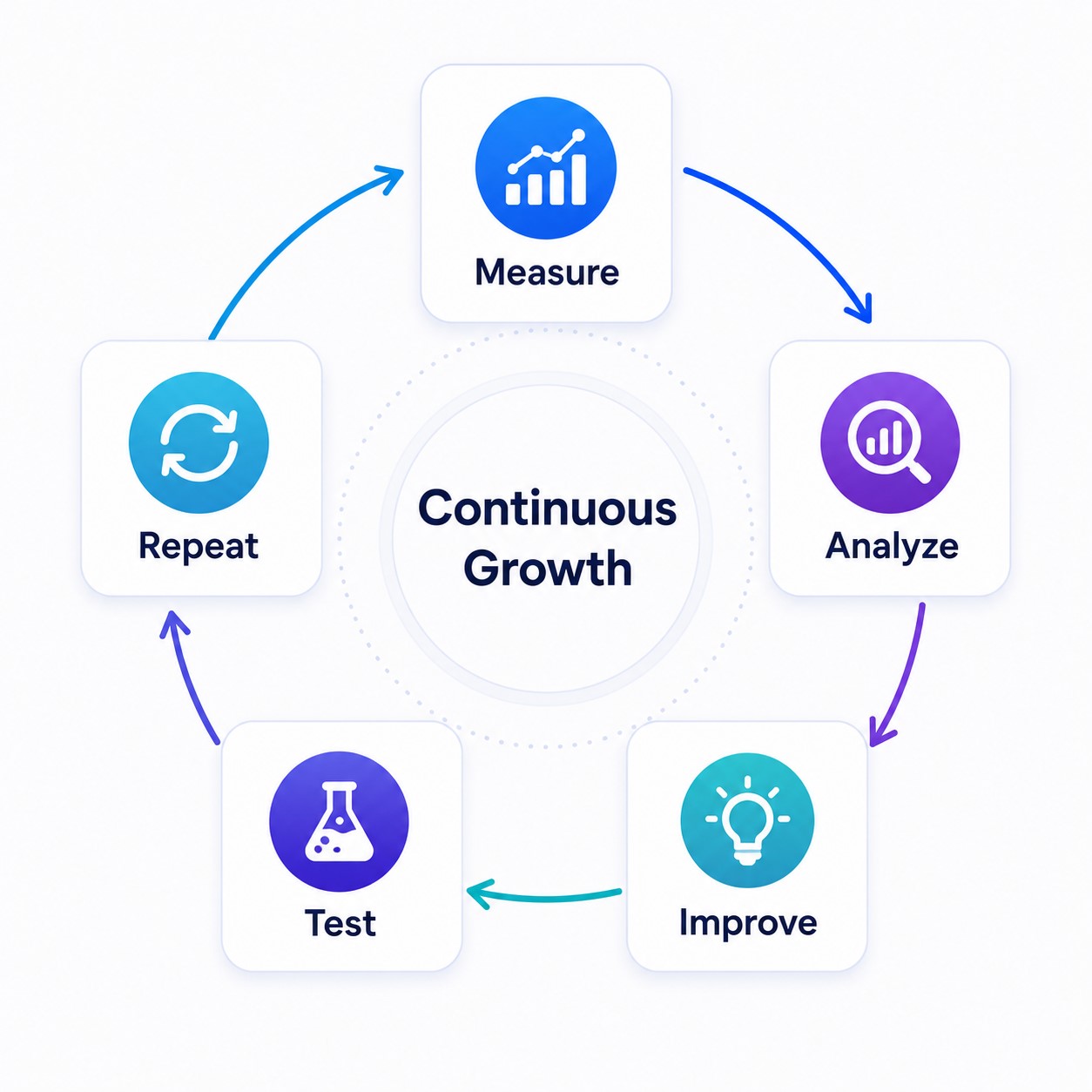
Optimization should follow a structured process rather than isolated changes.
| Optimization Stage | Primary Goal | Expected Outcome |
| Measure | Collect reliable data | Understand current performance |
| Analyze | Identify friction points | Prioritize improvements |
| Implement | Apply strategic changes | Improve user experience |
| Test | Validate results | Reduce unnecessary assumptions |
| Review | Repeat continuously | Support long-term growth |
Businesses exploring how to improve a website should first remove user friction before introducing new features. Faster navigation, clearer messaging, and stronger page structure often create greater business impact than visual redesigns alone.
A mature website plan evolves through continuous learning rather than occasional redesign projects. Every improvement should support measurable objectives while maintaining consistency across content, design, and user experience.
Conclusion
A successful website strategy provides direction before design, development, or content production begins. Clear goals and audience research establish direction. Information architecture, content, and design then turn that direction into a usable website.
The most effective websites continue improving after launch. Measuring performance, learning from user behavior, and refining strategic decisions help businesses adapt to changing customer expectations while maintaining long-term growth.