



- Property listing graphics should reveal spatial advantages that standard photographs cannot communicate alone.
- Floor plans become more useful when paired with accurate dimensions and room photographs.
- Real estate brochures need different information hierarchies for homebuyers and commercial investors.
- Property advertising creatives should emphasize one verifiable feature rather than competing selling points.
- Reusable design systems reduce production inconsistencies across listings, property launches, and brokerage campaigns.
Property marketing often begins before a potential buyer speaks with an agent. Listing photos, advertisements, brochures, and social posts create the first impression of a property. Their presentation influences what viewers notice and whether they explore the listing further.
Real estate graphic design makes property information easier to understand through photography, typography, layouts, and consistent branding. Effective visuals highlight relevant features while supporting different stages of the buyer journey. The objective is to communicate a property’s value accurately across every marketing channel.
What Is Real Estate Graphic Design?
Real estate graphic design is the creation of visual materials that present properties and communicate relevant marketing information. It combines property photography with structured layouts, branding, and information visualization. These materials help buyers understand individual listings while recognizing the companies representing them.
Unlike general graphic design, property-focused work must accommodate factual information about physical spaces. Floor plans require accurate dimensions, while listing graphics must distinguish property features from promotional claims. Visual appeal cannot come at the expense of factual clarity.
The work spans several types of graphic design, including visual identity and marketing communication. Digital advertising requires concise compositions, while print collateral accommodates detailed specifications. Property websites also need consistent graphics that support navigation and lead generation.
Before starting a real estate design project, prepare the following materials:
- Verified property data: Approved specifications, pricing, availability, and measurements.
- Original visual assets: Property photographs, floor plans, and architectural drawings.
- Brand guidelines: Approved logos, typography, colors, and usage restrictions.
- Audience requirements: Buyer profiles, relevant property features, and information priorities.
- Production specifications: Required dimensions, file formats, and print or digital delivery requirements.
Why Does Graphic Design Matter in Real Estate Marketing?
Effective graphic design for real estate helps buyers identify relevant properties before contacting an agent. Clear property listing visuals make prices and specifications easier to compare. Consistent presentation also strengthens brokerage recognition across marketing channels.
Property graphics can clarify information that photographs cannot communicate directly. Structured layouts help buyers distinguish essential specifications from supporting details. This reduces unnecessary searching when comparing multiple listings.
The main benefits extend beyond visual attractiveness:
- Stronger first impressions: Clear compositions make architectural features easier to notice.
- Faster information processing: Structured layouts help viewers locate prices and specifications.
- Consistent recognition: Repeated visual elements connect listings with the same brokerage.
- Better campaign coordination: Shared design systems support websites, advertisements, and social media.
- Clearer property comparisons: Standardized specifications help buyers evaluate different options.
These benefits influence different stages of the marketing funnel. An advertisement may attract attention, while a floor plan helps someone evaluate suitability. A brochure can then provide information needed before arranging a viewing.
Design should therefore support informed decisions rather than promise sales. Listing engagement, click-through rate, and qualified inquiries provide useful performance signals. Final transaction outcomes also depend on pricing, location, and market conditions.
What Real Estate Visuals Do You Need?
Different property marketing materials serve different purposes. Selecting the right assets depends on the property’s characteristics and the audience’s information needs. The following table outlines the most common formats.
| Visual Asset | Main Purpose |
| Property listing graphics | Present key features and attract attention |
| Social media graphics | Promote listings and maintain audience engagement |
| Digital ads | Communicate focused property offers |
| Property brochures | Provide detailed specifications and supporting imagery |
| Floor plans | Explain room arrangements and spatial relationships |
| Maps and location graphics | Show accessibility and surrounding amenities |
| Infographics | Simplify property data and market information |
| Email graphics | Support announcements and follow-up communications |
| Website visuals | Guide visitors through property information |
| Agent/brokerage branding | Establish a recognizable professional identity |
Residential properties often benefit from room photography and practical floor plans. Commercial properties may require access diagrams, technical specifications, and tenant information. Luxury real estate frequently needs more considered photography and editorial presentation.
The asset mix should also reflect the customer journey. Early-stage audiences need enough information to establish relevance. More engaged prospects may require downloadable brochures and detailed comparisons.
10 Real Estate Graphic Design Principles for Better Property Visuals
Effective graphic design for real estate depends on clear priorities rather than decorative complexity. Each design decision should improve property understanding or support a specific marketing action. The following principles establish a practical foundation.
Lead With the Property
The property should remain the primary visual subject. Decorative graphics must not compete with architectural features. Viewers should immediately recognize the space being advertised.
Choose a hero image that communicates the property’s strongest characteristic. Waterfront apartments may benefit from authentic views. Commercial developments often require exterior photography showing access and scale.
Before approving the composition, check these details:
- Architectural visibility: Keep distinctive structural features unobstructed.
- Natural proportions: Avoid stretching images or exaggerating dimensions.
- Visual distractions: Remove unnecessary decorative elements.
- Image boundaries: Protect important details from cropping.
- Brand placement: Keep logos away from architectural focal points.
Compare several representative hero images before approval. Select the photograph that best communicates the property’s defining characteristic. Avoid visually impressive angles that obscure its actual layout.
Use a Clear Visual Hierarchy
Visual hierarchy determines how viewers process property information. Size, contrast, positioning, and spacing establish priorities. Without clear structure, important details compete for attention.
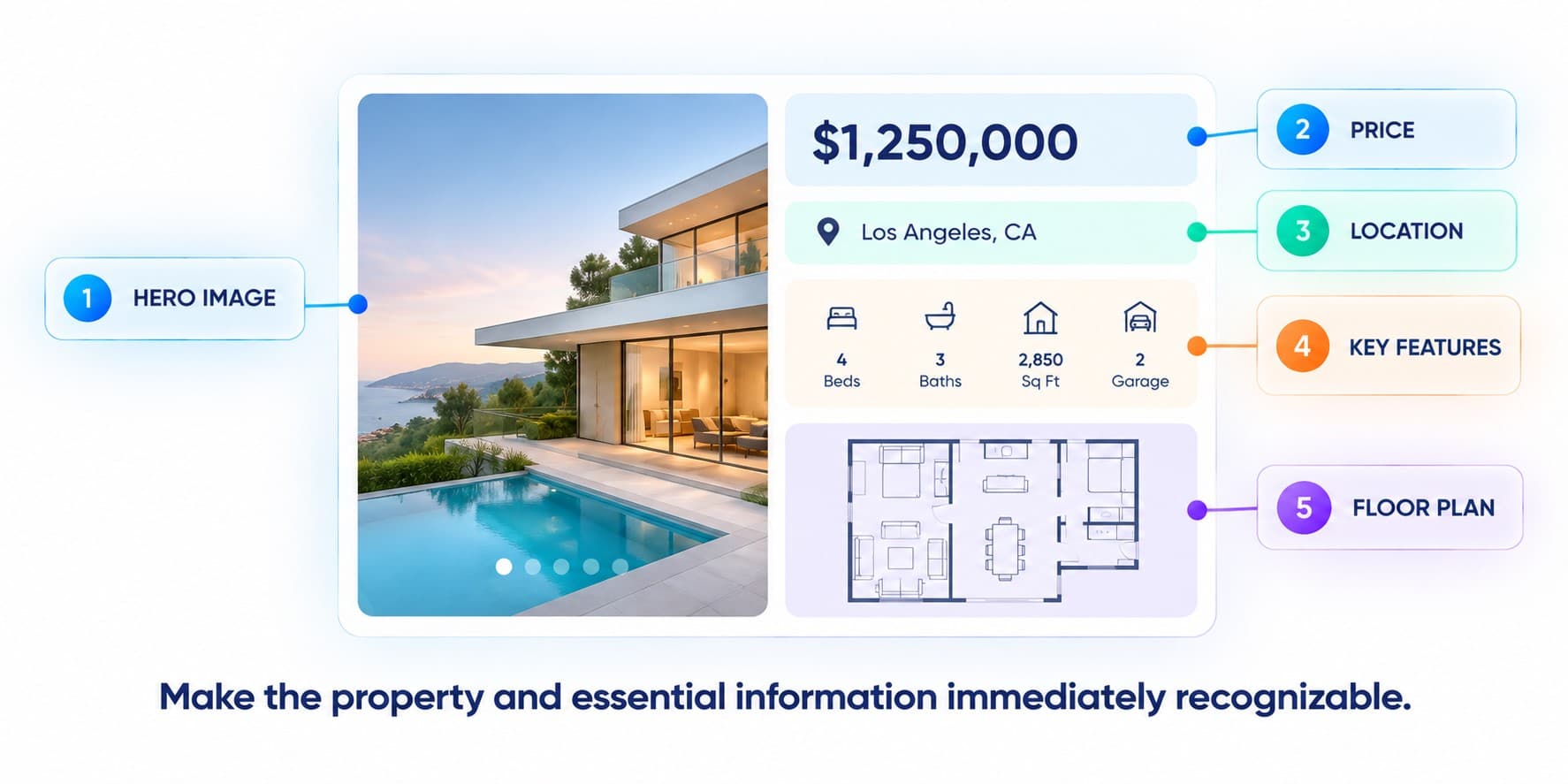
Prioritize information according to the marketing format. Listing advertisements should emphasize property imagery and location, while development brochures may highlight floor plans and specifications. Use larger typography for primary details and consistent spacing to group related information.
Effective hierarchy should make the property type and main selling point immediately recognizable. Supporting details must remain readable without competing with essential information. If viewers struggle to identify what matters most, simplify the layout.
Keep Property Information Easy to Scan
Property information should be organized around common buyer questions. Price, location, bedrooms, and floor area often deserve prominent placement. Additional details can appear in supporting sections.
Use concise labels instead of full explanatory sentences. Group related specifications so viewers can compare them efficiently. Avoid scattering important facts across multiple visual areas.
Information priorities should change with the property type:
- Residential: Bedrooms, bathrooms, floor area, and outdoor space.
- Commercial: Usable area, permitted use, access, and lease terms.
- Development: Unit types, availability, completion stage, and amenities.
Information hierarchy should also reflect the reliability of available data. Separate confirmed specifications from preliminary development details. Use consistent measurement units so buyers can compare properties without ambiguity.
Use Consistent Branding
Consistent branding helps buyers recognize a brokerage across different property listings. Shared typography and layouts connect advertisements with brochures and presentations. Reusable components also simplify production when multiple agents publish materials simultaneously.
Individual developments may need a distinct visual identity without losing their connection to the agency. Effective real estate branding establishes clear rules for logos, typography, and layouts. Reusable templates help teams apply these standards across property categories and marketing materials.
Branding should support property presentation rather than dominate it. Keep logos and corporate identifiers subtle on image-led listings. Reserve more prominent branding for presentations and corporate marketing materials.
Choose Typography for Readability
Typography affects how buyers interpret prices and property specifications. Decorative fonts can obscure numbers at smaller sizes. Font selection should prioritize clarity across digital and printed materials.
Apply these typography rules:
- Font pairing: Use no more than two complementary typefaces.
- Numerical clarity: Make prices and dimensions easy to distinguish.
- Line spacing: Prevent specifications from merging.
- Text alignment: Align comparable details for faster scanning.
- Type hierarchy: Separate headlines from specifications and supporting labels.
Sufficient text contrast is essential when specifications appear over photography. Use solid backgrounds or overlays when images contain visual complexity. Avoid placing small lettering across textured interiors.
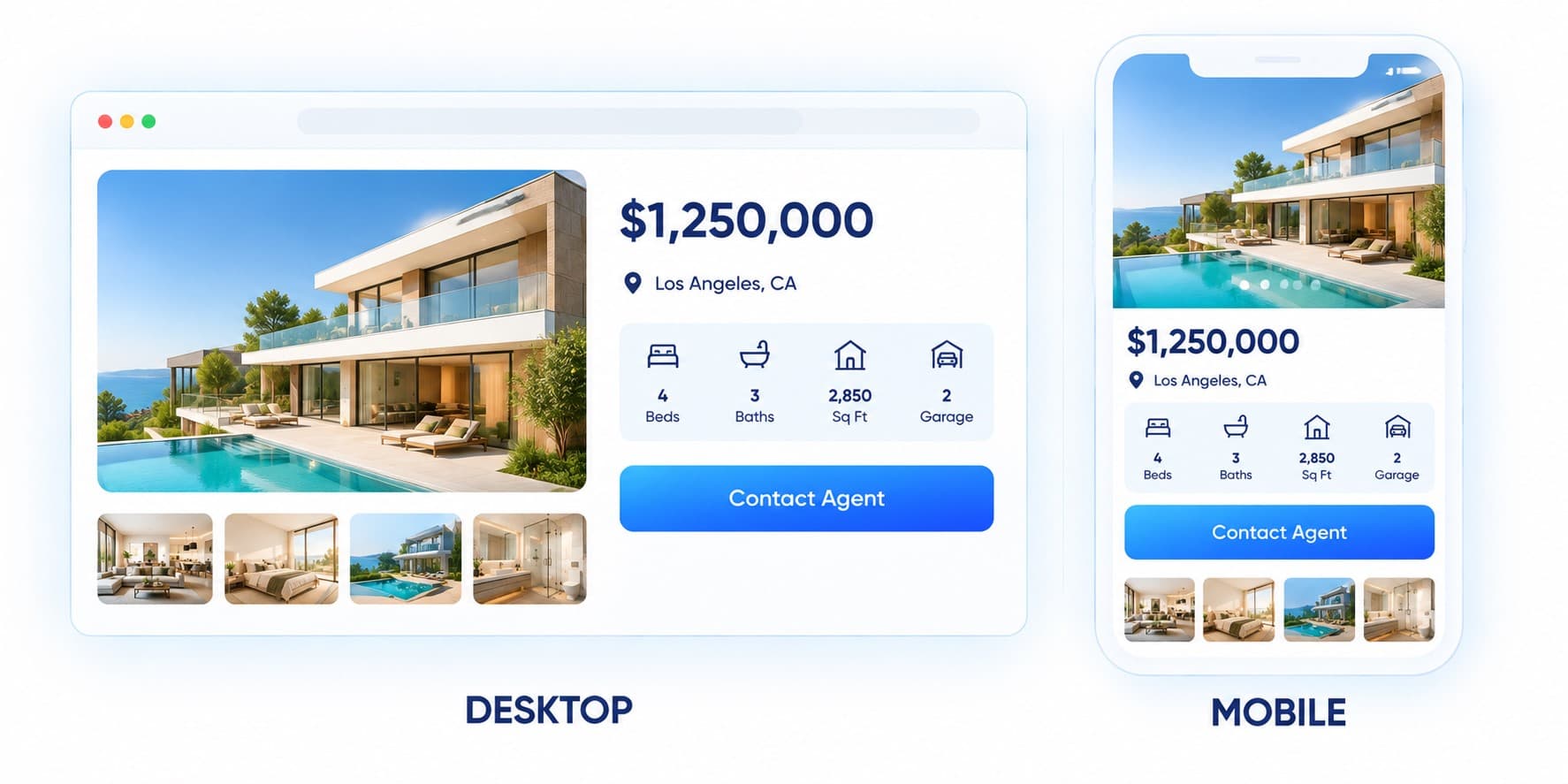
Test designs on actual mobile screens. Desktop typography may become illegible in social feeds. Essential details should remain readable without zooming.
Use High-Quality Property Photography
Property photography should represent spaces accurately. Poor lighting and distorted perspectives can mislead potential buyers. Image selection must therefore balance visual appeal with factual accuracy.
Architectural photography communicates building proportions. Interior photography reveals room layouts and lighting conditions. Exterior photography establishes the property’s relationship with its surroundings.
Build galleries around essential buyer questions:
- Room layout: Show connections between living areas.
- Natural light: Reveal actual window placement.
- Property condition: Document finishes without concealing defects.
- Outdoor spaces: Include balconies and gardens belonging to the property.
- Practical features: Highlight relevant storage and parking facilities.
Editing should improve presentation without changing material characteristics. Removing permanent defects or inventing views misrepresents the property. Identify virtual staging when disclosure is appropriate.
Use Color Strategically
Color should guide attention without competing with architectural photography. Restrained palettes help buyers distinguish property information from decorative elements. Every color needs a defined communication function.
Use consistent colors for these purposes:
- Primary color: Reinforce branding through recurring elements.
- Neutral tones: Separate content without distracting from photography.
- Accent color: Highlight pricing or availability.
- Background colors: Maintain readable information blocks.
- Status indicators: Distinguish available, reserved, and sold properties.
Property positioning can influence palette selection. Luxury listings may benefit from restrained colors, while family-oriented campaigns sometimes use warmer accents. Neither approach should distort actual finishes.
Maintain realistic photographic tones across every asset. Verify that status colors remain distinguishable and use clear labels. Avoid presenting decorative color treatments as evidence of property characteristics.
Show Context, Not Just Interiors
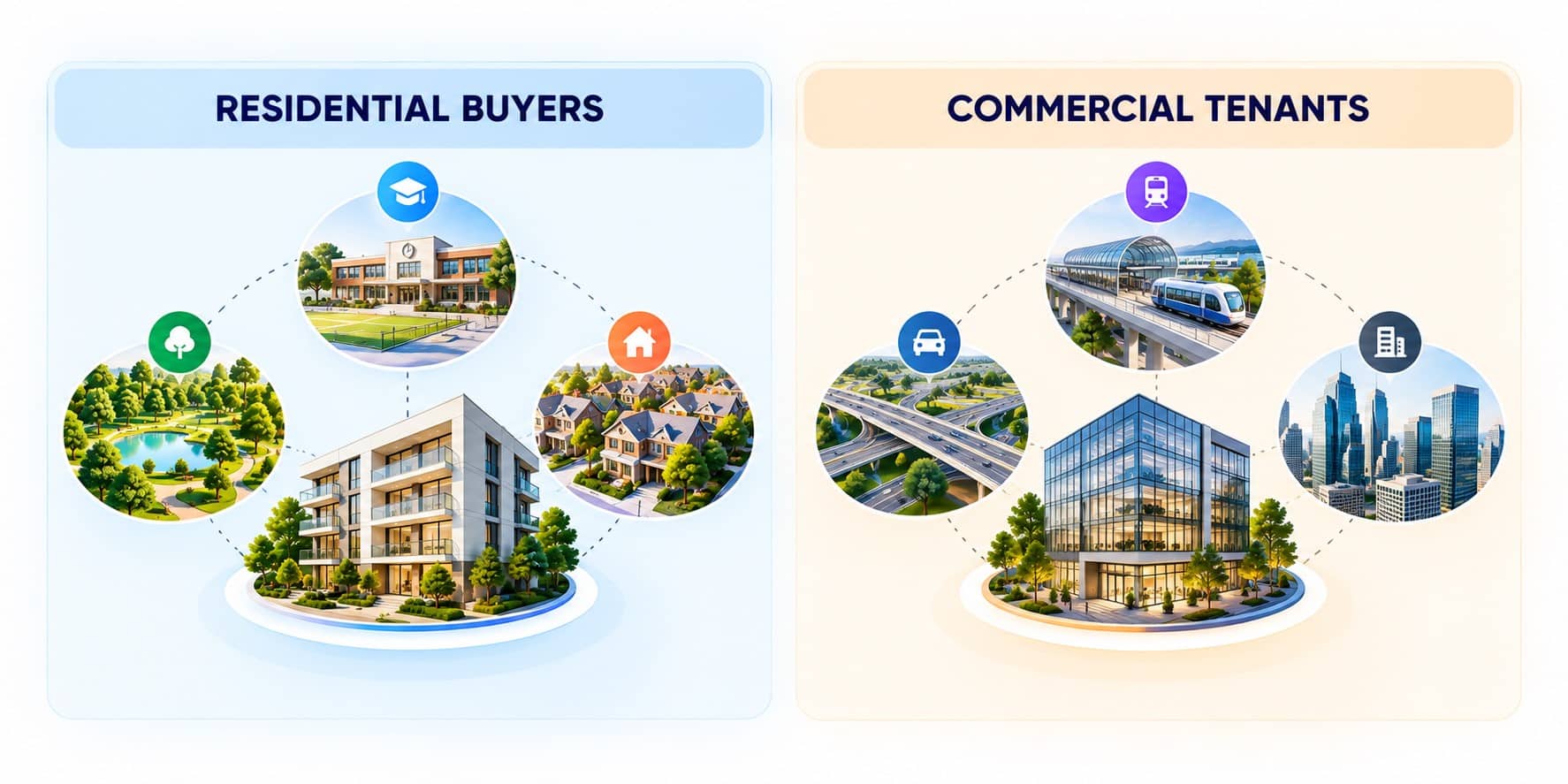
Interior photography cannot establish whether a property suits its intended occupants. Residential buyers may prioritize schools and outdoor spaces, while commercial tenants assess transport access. Accurate maps and exterior views should communicate these differences without exaggerating proximity.
Lifestyle imagery must represent genuine property features or clearly identified concepts. Avoid implying that unrelated attractions belong to the development. Location graphics should accurately show transport connections and surrounding infrastructure.
Adapt Visuals to the Marketing Channel
Property visuals must accommodate different distribution channels. Vertical stories may crop details visible in desktop advertisements. Adaptation should preserve verified information while changing image composition.
Adjust each format to its viewing conditions:
- Property portals: Prioritize accurate photographs and essential specifications.
- Social media feeds: Highlight recognizable features with concise headlines.
- Vertical stories: Keep important details within safe areas.
- Digital advertising: Emphasize one property benefit and clear action.
- Printed brochures: Use detailed imagery and structured specifications.
A shared design system supports consistent production. Flexible components accommodate different crops and information densities. This approach avoids rebuilding layouts for every placement.
Review assets within their intended environments. Check mobile previews and print proofs separately. Consistent communication matters more than identical presentation.
How to Design Property Listings That Stand Out
Effective property listings help buyers identify relevant information before requesting additional details. Their design should prioritize accurate photography and concise specifications. Decorative elements must not interrupt that process.
Start with the strongest representative hero image. Then organize essential details around a predictable hierarchy. Supporting images should explain features that the main photograph cannot show.
A practical listing production checklist includes:
- Select the hero image: Choose a representative photograph with a clear focal point.
- Verify specifications: Confirm price, location, dimensions, and availability.
- Arrange key information: Prioritize details needed for initial screening.
- Add supporting visuals: Include relevant floor plans and exterior photographs.
- Apply branding: Use approved typography and reusable layout components.
- Check every format: Review mobile crops and platform-specific requirements.
Floor plans deserve particular attention because photographs cannot reliably explain spatial relationships. Show room connections and circulation clearly. Include dimensions only when they have been verified.
Listing templates are useful for teams managing multiple properties. A consistent graphic design process can separate content verification from visual approval. This helps prevent outdated prices or incorrect specifications from appearing in new materials.
Real Estate Graphic Design for Social Media
Real estate social media requires more than reposting property listing images. Social media formats require layouts suited to their viewing environments. Successful visual content also gives audiences a clear reason to engage.
A consistent content system should accommodate both property promotion and agent expertise. Listing announcements serve different purposes from neighborhood guides. Each format needs its own information hierarchy.
Property Posts
Single-image posts work best when one property feature deserves immediate attention. Use a strong photograph with minimal supporting text. Place detailed specifications in the caption or linked listing.
Carousel posts can guide viewers through a property in a deliberate sequence. Begin with the strongest image and continue with complementary spaces. Finish with practical details or a relevant inquiry prompt.
Structure property carousels around a clear sequence of buyer questions:
- Slide 1 — First impression: Show the property’s most distinctive feature.
- Slide 2 — Space: Reveal the layout and connections between rooms.
- Slide 3 — Functionality: Highlight practical features such as storage or parking.
- Slide 4 — Location: Present relevant amenities or transport connections.
- Slide 5 — Next step: Provide essential listing details and a clear inquiry prompt.
Property Stories and Short-Form Content
Vertical content can highlight individual rooms or newly available properties. Short sequences work particularly well for focused property features. Their composition should accommodate mobile viewing.
Use brief labels that remain readable during playback. Keep essential details away from interface overlays. Motion graphics should support the imagery rather than dominate it.
Short-form content can also introduce property context. A location sequence might show the building exterior and surrounding amenities. Any location claims should remain accurate.
Real Estate Agent Content
Agent-focused content builds recognition beyond individual listings. Market updates and neighborhood guides can demonstrate relevant local knowledge. Educational graphics also help explain transaction processes.
Build recognizable agent content using consistent design elements:
- Agent identification: Display the agent’s name and professional role consistently.
- Visual signature: Use a recognizable layout for recurring educational content.
- Brokerage affiliation: Keep company branding visible without overwhelming the message.
- Source attribution: Identify the origin and reporting period of market statistics.
- Testimonial credibility: Attribute client feedback accurately and obtain permission before publication.
Avoid treating every post as a direct property advertisement. A useful editorial mix supports both immediate inquiries and longer-term familiarity. Consistent design makes these different formats recognizable.
Book a Call
Property Launch Campaigns
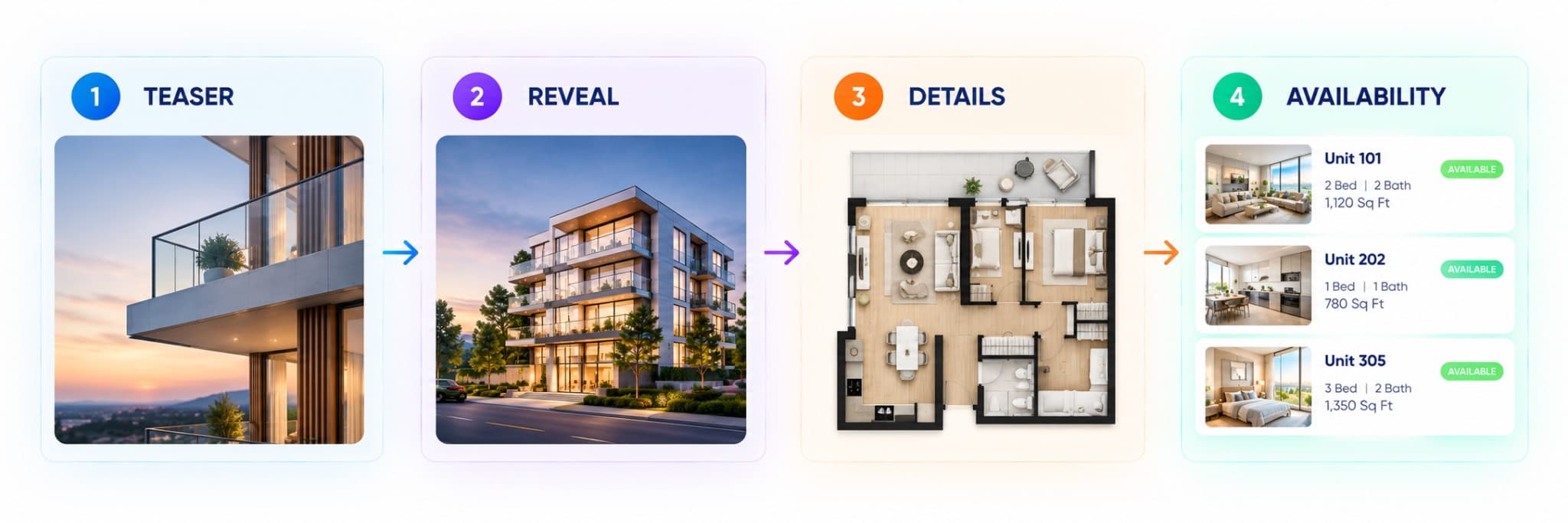
Property launches require coordinated visuals across multiple campaign stages. Each stage introduces information appropriate to buyer readiness. Consistent presentation connects early announcements with detailed property materials.
Launch visuals must distinguish confirmed features from proposed amenities. Identify conceptual renderings before adapting them for advertising. Consistent labeling prevents promotional materials from overstating development progress.
Real Estate Advertising Design
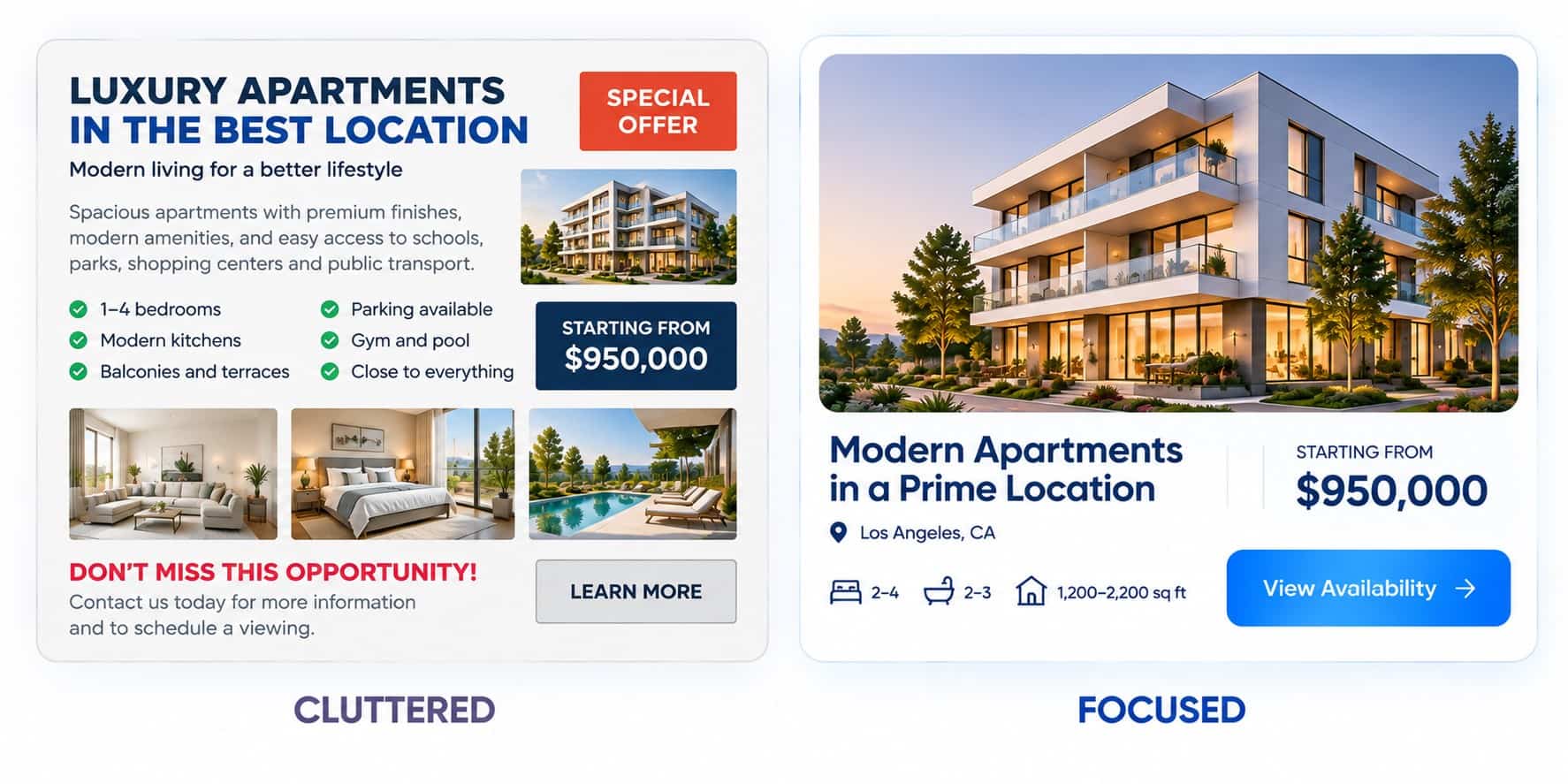
Real estate advertising design translates property information into concise promotional messages. Strong advertising creatives make the offer recognizable without overcrowding the composition. The creative should also match the destination viewers reach after clicking.
Search campaigns often depend on landing-page design rather than image-led advertisements. Property visuals should reinforce the location and features promised in search messages. Matching these details helps visitors recognize the advertised offer after clicking.
Different advertising formats require different creative decisions:
| Advertising Format | Creative Priority | Common Design Risk |
| Search campaign landing pages | Immediate property relevance | Weak message continuity |
| Display advertising | Recognizable property imagery | Excessive text |
| Social media ads | Strong mobile focal point | Important details lost in cropping |
| Retargeting campaigns | Familiar visual identity | Repetitive or outdated offers |
| Property launch campaigns | Coordinated creative system | Inconsistent development information |
Effective property ads communicate one verified benefit and a clear next action. Test creative variations across placements. Evaluate results using qualified inquiries alongside click-through rates.
How to Design Real Estate Brochures and Marketing Materials
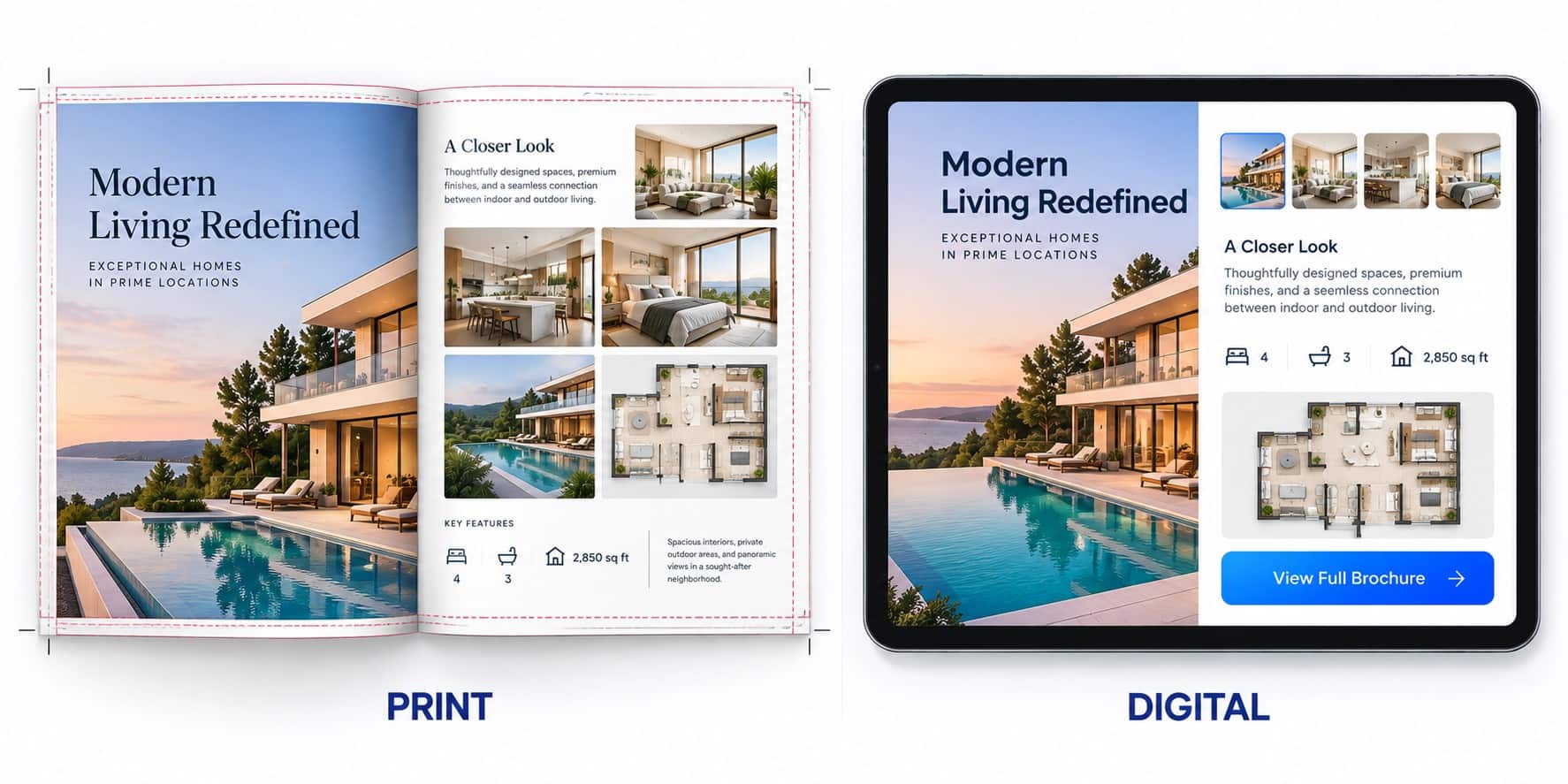
Professional graphic design for real estate helps brochures support deeper property evaluation than short advertisements. They combine imagery with specifications and supporting context. Their structure should reflect the questions buyers ask before arranging a viewing.
A brochure for residential properties may prioritize floor plans and room photography. Commercial property marketing materials often require more technical information. Development brochures may include site plans and construction timelines.
The format should determine the information hierarchy:
- Property brochures: Combine photography with verified specifications and layouts.
- Property flyers: Present essential facts for quick distribution.
- Sales presentations: Explain property value through a structured narrative.
- Development brochures: Connect project plans with location and amenities.
- Agent presentations: Communicate credentials and relevant experience.
- Market reports: Visualize trends and comparisons accurately.
Property brochures need consistent layouts across print and digital formats. Print files require correct bleed and safe margins. Digital versions must preserve readability on smaller screens.
How to Use Infographics in Real Estate Marketing
Real estate infographics simplify information that becomes difficult to compare in ordinary paragraphs. Their value comes from making relationships visible. Decorative charts without meaningful data offer little practical benefit.
Choose visualization formats according to the relationships readers need to understand. Spatial questions require different representations from financial comparisons. The selected format should make relevant differences visible without introducing misleading precision.
Different information types require different formats:
| Information | Recommended Visualization |
| Property specifications | Structured comparison |
| Room arrangements | Floor plan |
| Neighborhood statistics | Simple chart |
| Market trends | Timeline or line chart |
| Investment data | Clearly labeled financial chart |
| Amenities | Compact category matrix |
| Development milestones | Timeline |
| Location information | Map |
Accuracy should guide every design choice. Use consistent measurement units and label data sources. Avoid visual scales that exaggerate small differences.
Real estate infographics should also identify the limits of available information. Estimated figures must remain distinguishable from confirmed specifications. This is especially important in investor presentations.
Real Estate Graphic Design Trends
Useful graphic design trends address specific challenges in property marketing rather than simply changing its appearance. Minimalism can improve listing clarity, while interactive formats help audiences explore complex spaces. The right approach depends on the property, audience, and information being communicated.
| Design Trend | Real Estate Application | Practical Consideration |
| Minimalist design | Image-led listings with clear property details and restrained branding. | Remove decorative elements without hiding essential specifications. |
| Editorial layouts | Development brochures, luxury property presentations, and investment reports. | Use structured grids and typography to support detailed reading. |
| Interactive presentations | Digital floor plans, linked room photographs, and virtual property tours. | Keep navigation intuitive and spatial information accurate. |
| Data visualization | Commercial property comparisons, market reports, and investment presentations. | Use consistent assumptions, units, and clearly labeled data. |
| Motion graphics | Short property videos, animated floor plans, and development previews. | Avoid effects that distort dimensions or conceal property limitations. |
| 3D property visualization | Architectural visualization of proposed developments and unfinished interiors. | Clearly distinguish conceptual renderings from completed properties. |
| AI-assisted design | Layout variations, image organization, and repetitive asset production. | Require human review of property facts and visual accuracy. |
| Personalized visuals | Audience-specific presentations emphasizing investment data or residential features. | Adapt information priorities without changing factual property details. |
Choosing among graphic design styles requires more than matching a property’s price category. Evaluate whether each approach improves comprehension, preserves factual accuracy, and works across the intended marketing channels. Visual consistency should remain a priority, even when different formats require distinct treatments.
For property teams managing recurring design requests, real estate graphic design services can provide ongoing production support. The most useful arrangement depends on listing volume and asset complexity. Teams should also assess approval workflows and access to editable files.
Conclusion
Effective real estate graphic design combines strong property photography with clear information hierarchy and consistent branding. Different channels require different visual priorities. Accurate specifications and thoughtful layouts help buyers evaluate properties more efficiently.
The goal is not simply to make properties attractive. Good design makes information easier to understand and remember. Its commercial value comes from supporting relevant engagement throughout the buyer journey.