


A web design agency is a specialized team that plans, designs, develops, and optimizes websites to achieve specific business objectives. The right agency does far more than create an attractive interface. It helps businesses improve user experience, increase conversions, and support long-term growth.
Many organizations focus heavily on design aesthetics during vendor selection. In practice, the most successful website projects result from strategic planning, strong collaboration, and measurable business outcomes rather than visual design alone.
Benefits of Partnering With a Professional Website Design Agency
A professional website design agency provides expertise that most internal teams cannot replicate efficiently. Instead of relying on a single specialist, businesses gain access to strategists, designers, developers, researchers, and project managers working toward a common objective.
One of the biggest advantages is perspective. Internal teams often understand products exceptionally well but may overlook usability issues that affect prospects during the buying journey. External specialists identify friction points that prevent users from taking action.
Useful agency input often includes:
- Friction points in key user flows
- Gaps between messaging and buyer intent
- Design decisions that affect conversion
- Technical issues that slow user actions
Research from the Nielsen Norman Group consistently shows that user-centered design improves usability and customer satisfaction by aligning digital experiences with real user behavior. This approach helps organizations avoid costly redesigns later in the project.
Professional agencies also bring established workflows that reduce project risk. Structured planning, stakeholder alignment, testing procedures, and quality assurance processes improve predictability throughout development.
A structured agency workflow usually helps with:
- Earlier stakeholder alignment
- Clearer revision expectations
- Better handoff between teams
- Fewer late-stage project changes
Another major benefit involves strategic guidance. Effective websites are built around business objectives rather than design trends. Whether the goal is lead generation, Ecommerce sales, customer education, or brand positioning, strategic alignment influences every design decision.
Key Criteria for Evaluating a Web Design Agency
Selecting the right partner requires more than comparing portfolios. Businesses must assess how an agency thinks, communicates, manages projects, and measures success.
Many organizations begin searching for vendors without establishing evaluation criteria. This often leads to decisions based on price or aesthetics instead of long-term business value.
Before shortlisting agencies, clarify:
- What business outcome the website must support
- Which users the website needs to serve
- How success will be measured after launch
- Who will approve strategy, design, and scope
- What level of support the project needs
- They take a holistic approach to creating a website strategy, not just focusing on design
For companies researching how to choose a web design agency, the most effective approach is evaluating agencies through the lens of business outcomes. The strongest candidates demonstrate a clear understanding of user behavior, conversion optimization, and organizational goals.
The following criteria provide a practical framework for evaluating potential partners.
Define Your Business Goals and Website Purpose
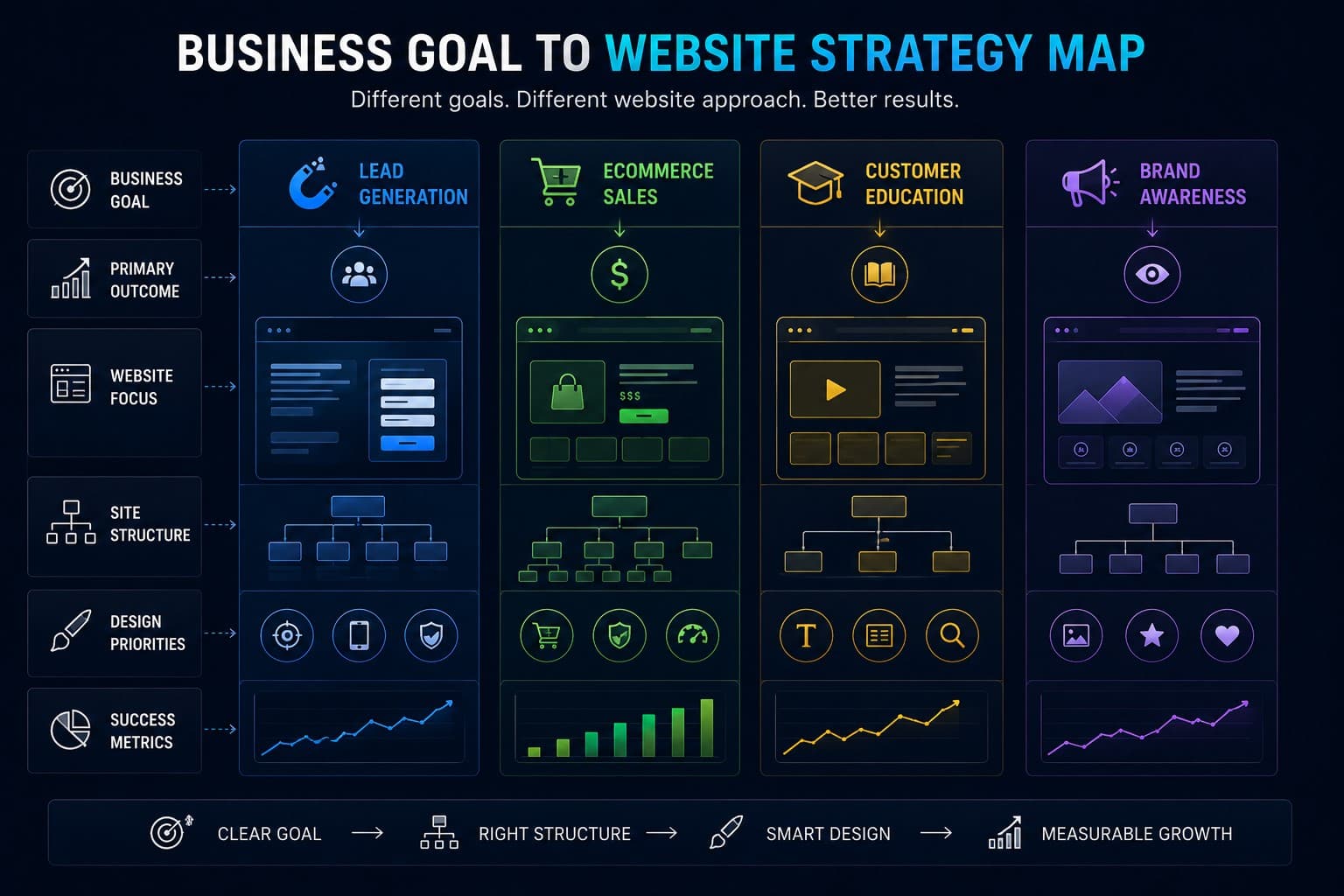
Before evaluating agencies, define what the website is expected to accomplish. Without clear objectives, even highly skilled agencies may deliver solutions that fail to support business priorities.
A website designed for lead generation requires a different approach than a website focused on Ecommerce transactions. Likewise, educational platforms demand different user experiences than software product websites.
Common website objectives include:
- Lead generation
- Ecommerce sales
- Brand positioning
- Product education
- Customer support
The most successful projects begin with alignment between business goals and agency capabilities. When objectives remain unclear, scope changes, delays, and disappointing outcomes become significantly more likely.
Businesses exploring how to choose a web design company should evaluate whether prospective agencies spend time understanding organizational goals before discussing visual design. Agencies that begin with strategy often deliver stronger long-term performance.
Assess Industry Experience
Industry experience matters because user expectations vary significantly across markets. A healthcare website, SaaS platform, legal practice, and manufacturing company each face unique customer behaviors and decision-making processes.
An agency familiar with a specific industry understands the language, trust signals, compliance requirements, and conversion patterns that influence user decisions. This knowledge often reduces research time while improving strategic recommendations.
Experience should not be measured solely by the number of projects completed. Instead, businesses should examine whether previous work demonstrates an understanding of industry-specific challenges and customer journeys.
| Agency Experience Type | Business Advantage | Potential Risk |
| Direct industry experience | Faster strategic alignment | May rely on outdated assumptions |
| Similar business model experience | Strong conversion insights | Limited niche expertise |
| No relevant experience | Fresh perspective | Longer learning curve |
Organizations attempting to choose a website design agency should ask agencies to explain what they learned from previous projects rather than simply presenting logos from past clients.
Understanding user behavior often creates more value than design talent alone. Agencies that understand customer motivations can build experiences that support real business outcomes.
A useful follow-up question is whether the agency can explain where users hesitate in your industry. For example, a B2B software buyer may need proof of integration depth, while an Ecommerce shopper may need delivery clarity before checkout. This shows whether the agency understands decision friction, not just page layout.
Industry-specific hesitation points may include:
- Missing proof of technical compatibility
- Unclear pricing or delivery terms
- Weak trust signals near conversion points
- Confusing product comparison pages
- Limited answers to buyer objections
Evaluate Portfolio and Real Case Studies
Many businesses evaluate portfolios primarily through visual appeal. While aesthetics matter, appearance alone provides limited information about business performance.
A strong portfolio demonstrates problem-solving capabilities. Instead of showcasing attractive interfaces, the best agencies explain challenges, decisions, implementation approaches, and measurable outcomes.
Case studies often reveal information that portfolio galleries cannot. Businesses should look for evidence such as:
- Conversion rate improvements
- Increased lead volume
- Reduced bounce rates
- Improved user engagement
- Faster page performance
When evaluating portfolios, pay attention to project complexity. An agency that successfully redesigned a multi-product SaaS platform may demonstrate capabilities beyond an agency focused exclusively on brochure-style websites.
Complex projects often require agencies to handle:
- Multiple user journeys
- Large content ecosystems
- Advanced integrations
- Cross-functional stakeholder feedback
- Ongoing feature expansion
Businesses researching how to choose a website design company should prioritize agencies that openly discuss results, challenges, and lessons learned. Transparency often indicates strategic maturity and confidence in their process.
If you’re interested in learning how to choose a web designer, you can use this detailed guide to compare freelance specialists and agency teams.
Understand Their Website Design Process
A structured process is one of the clearest indicators that an agency can consistently deliver quality work. Agencies without documented workflows often struggle with scope management, communication, and deadline predictability.
The best agencies follow a repeatable framework that aligns stakeholders before design work begins. This approach reduces misunderstandings and minimizes expensive revisions later in the project.
A typical website design process includes:
- Discovery and stakeholder interviews
- User and competitor research
- Information architecture planning
- Wireframing and user flow mapping
- Visual design development
- Front-end and back-end development
- Quality assurance testing
- Launch and post-launch monitoring
Each stage serves a specific purpose. Discovery identifies business goals, research validates assumptions, and testing ensures the final product functions as intended.
Businesses should ask agencies how they manage feedback cycles. Excessive revisions often indicate weak planning during earlier project phases.
For a deeper look at a proven website design process, review how structured discovery, design, development, and QA reduce project risk.
Schedule a Call
Review Team Structure and Skill Set
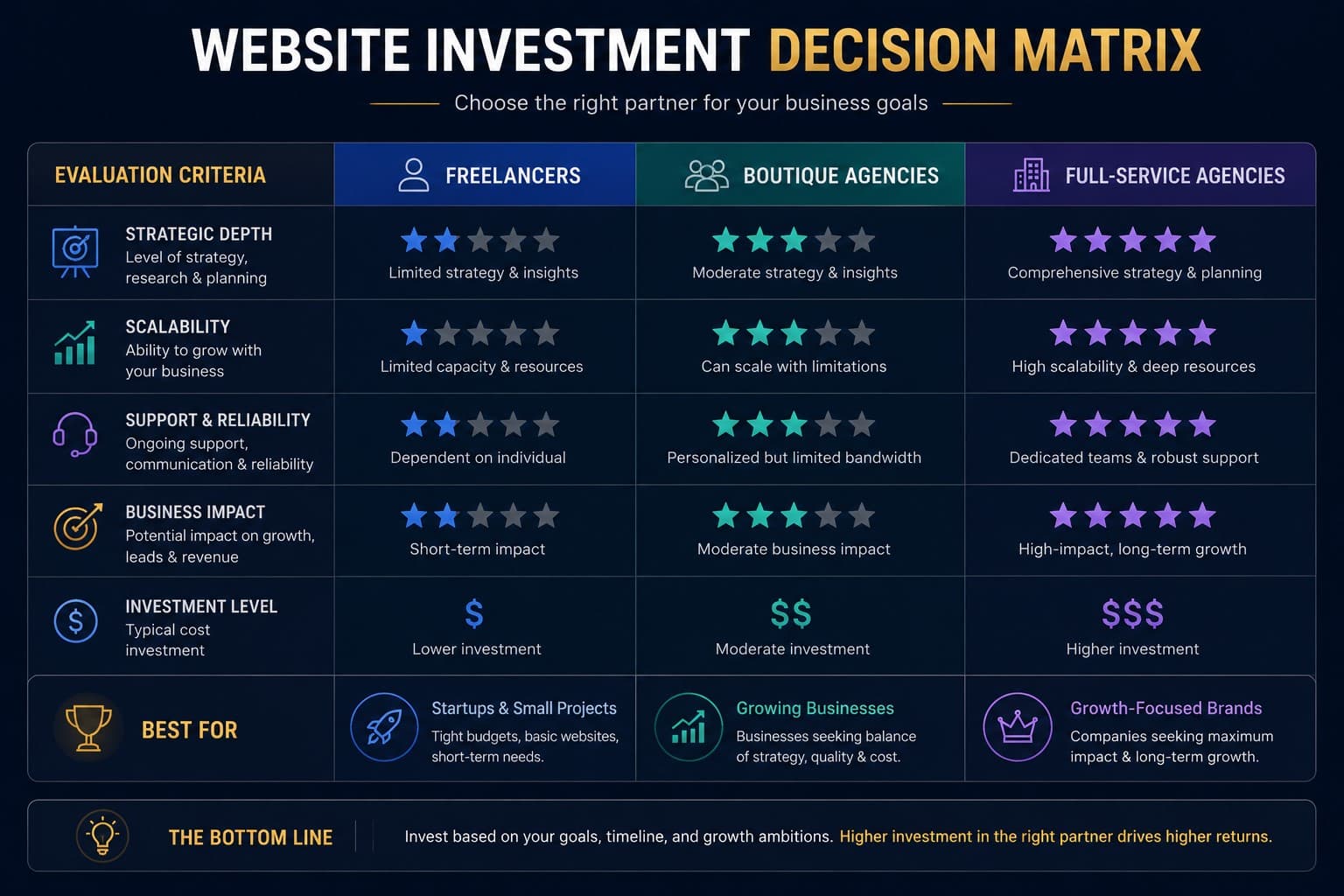
The quality of a website depends heavily on the people involved in the project. A single freelancer may be highly talented, but complex projects often require multiple areas of expertise.
Signs of a well-balanced agency team:
- Business strategy informs design decisions
- UX and development collaborate early
- Clear ownership exists for every project stage
- Specialists communicate throughout the project
- Decisions are validated before implementation
Each role contributes a different perspective. Strategists focus on business goals, UX specialists address usability, and developers ensure technical implementation supports the intended experience.
When reviewing proposals, ask who will actually work on the project. Some agencies showcase senior experts during sales discussions but delegate execution to junior staff.
Before signing, ask who will handle:
- Strategy and discovery
- UX decisions
- UI design execution
- Development and QA
- Project communication
A capable web design team should demonstrate both technical expertise and business understanding. The combination often produces stronger outcomes than design skills alone.
Organizations evaluating reliable web design agencies with transparent processes should request team introductions before signing a contract.
Set Budget Expectations and Understand Pricing Model
Pricing discussions often create confusion because agencies use different billing structures. Understanding how costs are calculated helps businesses compare proposals more accurately.
The most common pricing models include:
| Pricing Model | Best For | Considerations |
| Fixed Price | Clearly defined projects | Limited flexibility for scope changes |
| Hourly Billing | Evolving requirements | Costs may become less predictable |
| Retainer | Ongoing design needs | Requires long-term commitment |
The lowest proposal is not always the best value. A cheaper agency may exclude research, testing, content support, or post-launch optimization that significantly impacts results.
Transparency is critical. Businesses should understand exactly what deliverables are included, what triggers additional costs, and how change requests are handled.
A clear proposal should specify:
- Included page templates
- Research and strategy scope
- Revision limits
- Development responsibilities
- Post-launch support terms
Companies exploring website design pricing should compare scope, deliverables, revision rules, and post-launch support before choosing a proposal.
One practical approach during the web design agency vetting process is comparing scope documents rather than total project costs. This often reveals meaningful differences between competing proposals.
Consider Post-Launch Support and Long-Term Maintenance
Website launch should be viewed as the beginning of optimization rather than the end of development. User behavior, business priorities, and market conditions continue evolving after launch.
The strongest agencies provide ongoing support that includes performance monitoring, technical updates, usability improvements, and strategic recommendations. This helps organizations adapt to changing user expectations.
Businesses that plan for long-term optimization often outperform competitors that treat website projects as one-time initiatives. Continuous improvement creates opportunities to increase conversion rates and improve customer experience over time.
| Support Area | Why It Matters | Questions to Ask |
| Security Updates | Protects site integrity | How quickly are critical updates applied? |
| Performance Monitoring | Identifies technical issues | Which metrics are monitored regularly? |
| Conversion Optimization | Improves business results | How are optimization opportunities identified? |
| Content Updates | Keeps information current | What updates are included in ongoing support? |
| Analytics Reviews | Supports decision-making | How often are performance reports provided? |
Organizations seeking a strong long-term partnership should ask agencies how they measure success after launch and what support options remain available.
Businesses considering whether to outsource web design should evaluate internal capacity, project complexity, communication needs, and long-term ownership.
Agencies that follow proven website design practices typically provide structured optimization programs instead of waiting for problems to appear.
The most successful website projects are rarely the result of exceptional design alone. They emerge from a combination of clear goals, strong processes, multidisciplinary expertise, and ongoing optimization after launch.
Warning Signs You’re Dealing With the Wrong Web Design Agency
The wrong agency can create far more damage than a delayed launch or a disappointing design. Poor strategic decisions often lead to wasted budgets, missed revenue opportunities, and costly redesign projects within a year or two of launch.
Many warning signs appear before a contract is signed. Businesses that recognize these signals early can avoid partnerships that create long-term problems.
The most common red flags include a lack of process transparency, unrealistic promises, weak communication, and an inability to explain how design decisions support business goals.
| Red Flag | Why It Matters | Business Risk |
| Vague proposals | Scope and deliverables are unclear | Budget overruns and disputes |
| Guaranteed rankings or conversions | Outcomes cannot be guaranteed | Unrealistic expectations |
| No documented process | Project execution becomes unpredictable | Delays and quality issues |
| Limited case study evidence | Results are difficult to verify | Increased selection risk |
| Weak communication | Problems remain unresolved longer | Stakeholder frustration |
| Design-first mentality | Strategy receives less attention | Lower business impact |
One of the strongest indicators of future problems is an agency that immediately discusses visual design before understanding business objectives. Effective agencies spend considerable time learning about customers, competitors, and organizational goals before proposing solutions.
Another warning sign is the absence of measurable outcomes in portfolio examples. Attractive visuals are easy to showcase. Demonstrated business impact is much harder to fake.
Businesses should also pay attention to communication quality during the selection process. Delayed responses, inconsistent information, or difficulty answering direct questions often become larger issues after work begins.
Companies looking to evaluate and select the ideal web design partner should request detailed project examples, ask process-related questions, and verify how success will be measured before signing any agreement.
When discussing design approaches, agencies should be able to explain how established web design principles influence usability, accessibility, and conversion performance.
Conclusion
Learning how to choose a web design agency requires evaluating much more than visual quality. The strongest partners demonstrate strategic thinking, industry understanding, structured processes, and a commitment to measurable business outcomes.
For businesses focused on how to select the best web design agency for your company, the goal is not finding the most impressive portfolio. The goal is finding a partner capable of translating business objectives into a website that performs effectively over the long term.