


If the appeal of starting with a blank canvas is because it’s easier to make your website match your branding or you haven’t found a template that looks nice, you’ll be wasting money. The reason why it makes sense for businesses to pay more for bespoke web designs is because it lets you customize user journeys, page structures, etc. now (and, again, later) on top of basic visual elements.
As such, bespoke website design is best approached as a business decision, not just a visual one. The following bespoke vs template comparison shows you why and when to build a website around specific goals, users, and long-term needs.
What Is Bespoke Website Design?
Bespoke website design is a website approach where websites are made to order from scratch. It’s not based on a pre-made template or theme whatsoever, but built intentionally for specific business goals, users, and functional requirements. The result is a custom, completely unique, and on-brand website.
What Makes a Website Truly Bespoke?
It’s the approach and process that make a website genuinely bespoke, more so than the actual service description or designs. In practice, this means the website design project should start with a comprehensive understanding of the client’s requirements, goals, target audience, and competitive landscape, followed by strategy, and only then design decisions.
If an agency skips this step but rather starts with selecting a theme to customize, it can’t be labeled as truly bespoke. In short, the design team should start with a blank page, instead of trying to retrofit your business into an existing template.
What Buyers Often Mistake for Bespoke Design
Web design agencies use terms like “custom functionality and integrations”, “tailored”, “handcrafted”, “bespoke themes”, and “customized templates” loosely, but it’s not to fool you (necessarily). It’s more a matter of different definitions and interpretations.
For example, an agency might use the theme or template for several clients, keep most of the structure and layout, add different brand elements, and label this service as bespoke design. However, this doesn’t qualify as bespoke design. Modifying a pre-made theme, even if you edit it significantly, isn’t considered truly bespoke web design. Neither is relying on a website builder.
Instead, you should look at the web design process that goes into designing the website. Only when they use a discovery-first design process will the website truly be bespoke.
Bespoke vs. Template Website Design: What’s the Difference?
| Feature | Template Website | Bespoke Website | Best Fit |
| Originality | Limited visual uniqueness and brand differentiation, because it’s built from a pre-made design that’s used by many others. | Completely unique look and UX because the process starts with strategy and a blank canvas. | Template: General blogs, side hustles, and early-stage businesses
Bespoke: Brands with established identities |
| Loading Speed | Slower due to unused features, generic scripts and loads of code. | Faster and optimized from day one as only the necessary code needs to be included. | Template: Landing pages, blogs, or e-commerce product pages that use the same structure
Bespoke: Performance-critical websites (e.g. e-commerce sites) and high-traffic platforms |
| Scalability | Limited, because major changes are often difficult without rebuilding. | Great! Because it’s built to grow with your business, new features and integrations can easily be accommodated. | Template: Simple websites unlikely to expand significantly
Bespoke: Growing businesses with evolving needs |
| Initial Cost | Low upfront cost | Higher initial investment | Template: Startups, small businesses, or individuals who need to launch quickly
Bespoke: Growing businesses with evolving needs |
| Long-term Flexibility | Constrained, because you depend on the provider’s updates. | Excellent! Because you have full control and ownership, you can adapt whatever, whenever. | Template: Short-term projects
Bespoke: E-commerce businesses |
The Limits of Off-the-shelf Themes
While premade website design themes come with low upfront cost, their drawbacks can add up over time, creating a less solid website and investment. Design constraints, code bloat, and plugin dependency risks are common trade-offs that can limit originality, flexibility, and future development.
Because you’re not designing for a specific business and its audience, pre-built themes include loads of code that you’ll likely never need. While this might sound like a benefit, your page load times will be slower and your SEO rankings will take a knock.
Then, there’s the more obvious consequence of limited originality. Yes, you can customize elements like color schemes. However, the underlying structure remains mostly the same and you typically can’t change the layout much. Two websites with different visuals, but the same grid system, won’t look that indistinguishable.
Also, if you want to add a specific feature like a slider, you’ll have to rely on a third-party plugin. With the added functionality also comes extra licensing costs and risks. For example, a plugin update can cause issues with functionality or introduce security risks.
Plus, you won’t only be at the mercy of plugins’ roadmaps, but also the theme developers. Major theme updates get released periodically. However, with each update, there’s a risk that your customizations will break, restricting your future development options further.
What Bespoke Gives You Instead
Bespoke website design gives you much more creative control. Every visual decision, from overall layout to microanimations, is made intentionally for your business.
Then, after the initial choices, the design is yours, allowing you to change the user experience further and incorporate new website design tips. Plus, as each component can be built to the same spec, your website will feel cohesive across pages and growth stages.
The benefits don’t stop at aesthetics. You can also expect stronger website performance potential. Your website only needs to serve your specific use case. This prevents code bloat and allows you to support features, workflows, and growth paths that templates may not handle well.
The latter has the greatest impact over time. You can build your site to support custom functionality, instead of having to rely on Zapier connections or third-party plugins. For example, e-commerce businesses can easily add more product lines as their business grows, while B2B brands can add new content structures to support thought leadership.
Why Bespoke Website Design Matters for Business
A common trap is to treat your website as a digital brochure — an online presence to have, not leverage. However, a well-designed bespoke website doubles up as an asset and business tool.
It becomes a sales and conversion engine. With strategic website planning, you can eliminate friction at critical moments where a template creates confusion.
Better Alignment with Business Goals
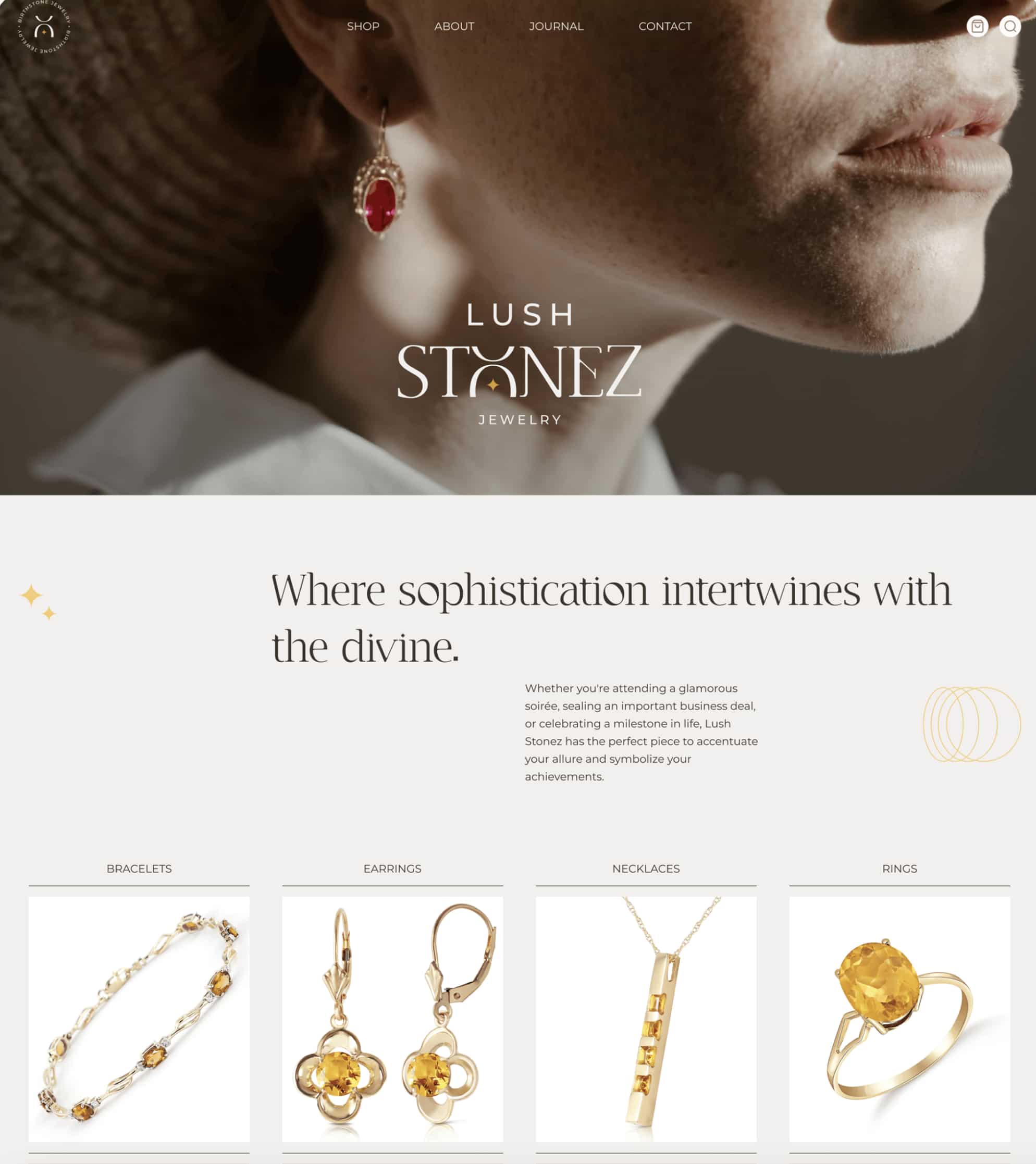
Made-to-order website design allows you to construct your information architecture, visual hierarchy, and content flow around your brand’s unique value proposition that will help it to reach its commercial objectives. For example, luxury e-commerce brands can create image-heavy home pages to evoke aspiration, while B2B SaaS companies can focus on testimonials and customer reviews to establish credibility quickly.
Greater Flexibility and Scalability
As there’s no pre-existing layout, you can plan the design around your content. This greater flexibility also applies to features. You can engineer only the features that you need. With this well-considered technical foundation, it becomes a website built for growth, not a liability that needs to be replaced every few years.
When you take shortcuts during website development, you only end up creating technical debt. Similarly to financial debt, it’s still manageable early on. However, as your business grows, so too does the pressure. You’ll have to handle more traffic and introduce new features, which will be costly fixes rather than celebratory milestones.
Stronger Brand Authority and User Experience
Bespoke website design is the only way to ensure your website is original and uniquely yours. That said, it’s more than simply setting yourself apart from competitors’ websites.
You’ll also receive more distinctive, intuitive UI/UX experiences, because you can create a user journey around actual data and research. Considering that a Clutch survey found that 50% of consumers believe that website design is crucial to your brand and 31% think that user experience specifically should be a top priority for website designs, this is huge.
How a Bespoke Website Comes Together
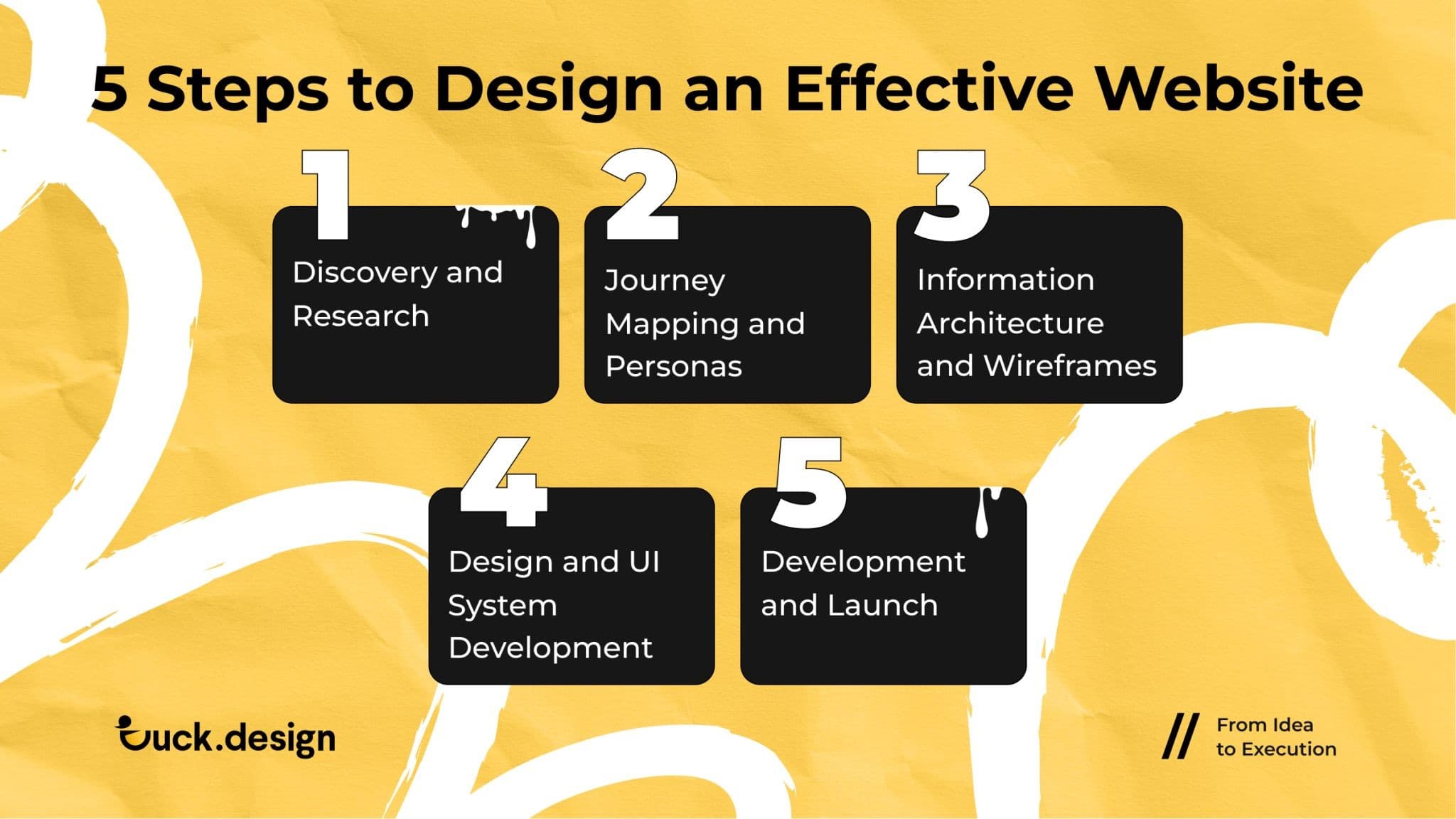
Discovery and Strategy
The first stage is about listening and learning. Your website design team will start with comprehensive research to understand your target audience and business. This will typically include:
- Stakeholder interviews
- Workshops
- Strategy sessions
- Market research
- Competitor benchmarking
- Website analytics (for businesses with existing websites)
Your team will ask questions like:
- Who visits your website?
- Why do they visit your website?
- What do they need and wish to find?
- What’s the action they need to take?
- What does success look like for your business?
In short, it’s about discovering what you want, what your audience needs, and finding where these align.
UX, Structure, and Design Direction
Once the goals are clear, attention turns to how visitors will actually use the site. With careful user journey planning, you can identify beforehand where friction might occur and ensure you provide the right details at each stage. Design should always solve real problems, instead of invented ones.

This user journey map will give your website its skeleton (aka sitemap). Now, website designers can define different pages, how they relate to one another, and the information hierarchy. These steps will ensure that both human visitors and search engines (traditional and AI) can find the information they need easily.
Your design team will also create wireframes to help them translate the sitemap into layouts. It will answer questions like:
- What should appear above the fold?
- What is the primary action?
- What are the secondary actions?
- How does navigation behave?
- How will a multi-step task flow across screens?
Only after the structure has been validated will the team start to create a visual direction. This is typically explored with the help of mood boards, color palettes, and component libraries. Elements like color, typefaces, illustrations, etc. are easier to change, hence, why they should come last.
From Design to Delivery
The bespoke design process doesn’t end once the visuals are approved. It continues through implementation, refinement, and launch.
The original thinking should carry through into the finished website. To ensure this, it requires more than simply translating wireframes into code, but that the designers involved also understand the intent behind the decisions and test for real situations.
When a Bespoke Website Makes Sense
The decision between going the custom-built website approach or settling with template-based design shouldn’t be driven by prestige. The focus is on finding the option that will best fit the complexity of your business and its growth stage.
When Bespoke Is the Right Fit
If your website is central to your marketing efforts (specifically lead generation and conversion) and/or your target audience typically takes complex user journeys, bespoke design is justifiable. It will allow you to engineer user paths intentionally and own a distinct visual identity to help with brand differentiation.
When a Template May Be Enough
A template (regardless of the off-the-shelf website limitations) will serve you better when your website is more of an information hub than a marketing tool. It’s also the rational choice for small startups that simply need a credible online presence. For example, early-stage startups that still need to validate a product and value speed and practicality won’t need a long-term website fit that bespoke web design offers.
What to Ask Before Choosing a Bespoke Website
To help you determine if custom web design or a template will make more sense, ask yourself the following three questions:
What Business Problem Should the Website Solve?
While websites are inherently visual, they should give you the tools you need to achieve your business goals. This means that before you contact a website design agency, you should first be able to name the primary business problem and measurable outcome you expect, e.g. lead volume, conversion rate, or customer retention.
What Needs to be Truly Custom?
Not every feature justifies the higher cost of bespoke development. It’s crucial that you can prove that each custom feature will directly impact a key metric like conversion or retention.
To help you with this step, you can prioritize your requirements into the following tiers:
- Essential for launch
- Important, but can be delayed
- Nice-to-have features unlikely to be used
What Does “Bespoke” Mean From This Provider?
As mentioned earlier, the word “bespoke” is used loosely. For some agencies it means building from scratch, for others tailoring a template carries the same distinction. Knowing this beforehand will protect yourself from paying too much for a design that will still have template-based website limitations.
Common Misunderstandings About Bespoke Web Design
❌ Bespoke Does Not Automatically Mean Better
Custom build doesn’t guarantee quality. The value is found in the thinking that goes into, for example, the strategy, wireframing and UX structure and not the build method itself. If the strategy is weak or poor UX decisions were made in the process, a template that was thoughtfully customized can perform better.
❌ High Upfront Cost vs. Long-Term Value
Bespoke is an investment that needs to be justified by real business needs. If you’re already planning a complete website redesign in a few years’ time, you’ll lose out on the long-term value that makes the higher cost worth it.
❌ “Custom” and “Bespoke” Are Not Always the Same
You should look at the actual scope, process, and level of customization rather than rely on labels alone. Agencies sometimes use these words interchangeably, but they can mean anything from a slightly tweaked template to a fully architectured website.
Final Thoughts
Bespoke websites matter when businesses need more than a generic layout. When they need their website to be a digital foundation to help them reach very unique goals, specific audiences, and drive future growth, it makes sense to pay more.
This approach also allows for great control. Instead of adapting business processes to fit a template, your website is created to support how your business actually operates and customers really behave.