


A great product isn’t enough. If your audience forgets you five minutes after visiting your site, your branding isn’t working.
In today’s saturated digital market, consumers are hit with up to 10,000 brand messages a day. Only a few cut through. The ones that do? They have one thing in common: a clear, memorable brand strategy backed by visual precision.
That strategy isn’t built on guesswork. It’s the result of deliberate choices — how you present yourself, how you speak, and how consistently you show up across every touchpoint.
This article will show you how to create a brand strategy that doesn’t just “look good” — it sticks. Visually. Emotionally. And most importantly — commercially.
What is a Brand Strategy?
A brand strategy is a long-term plan that defines how you will present your brand to your audience. It defines all aspects of your business’s public appearance — how it looks, sounds, and communicates, and why that matters to the people you’re trying to reach.
It’s the strategic core behind how your brand is built, recognized, and trusted. Every decision — from your logo to your website copy to your customer experience — should stem from it.
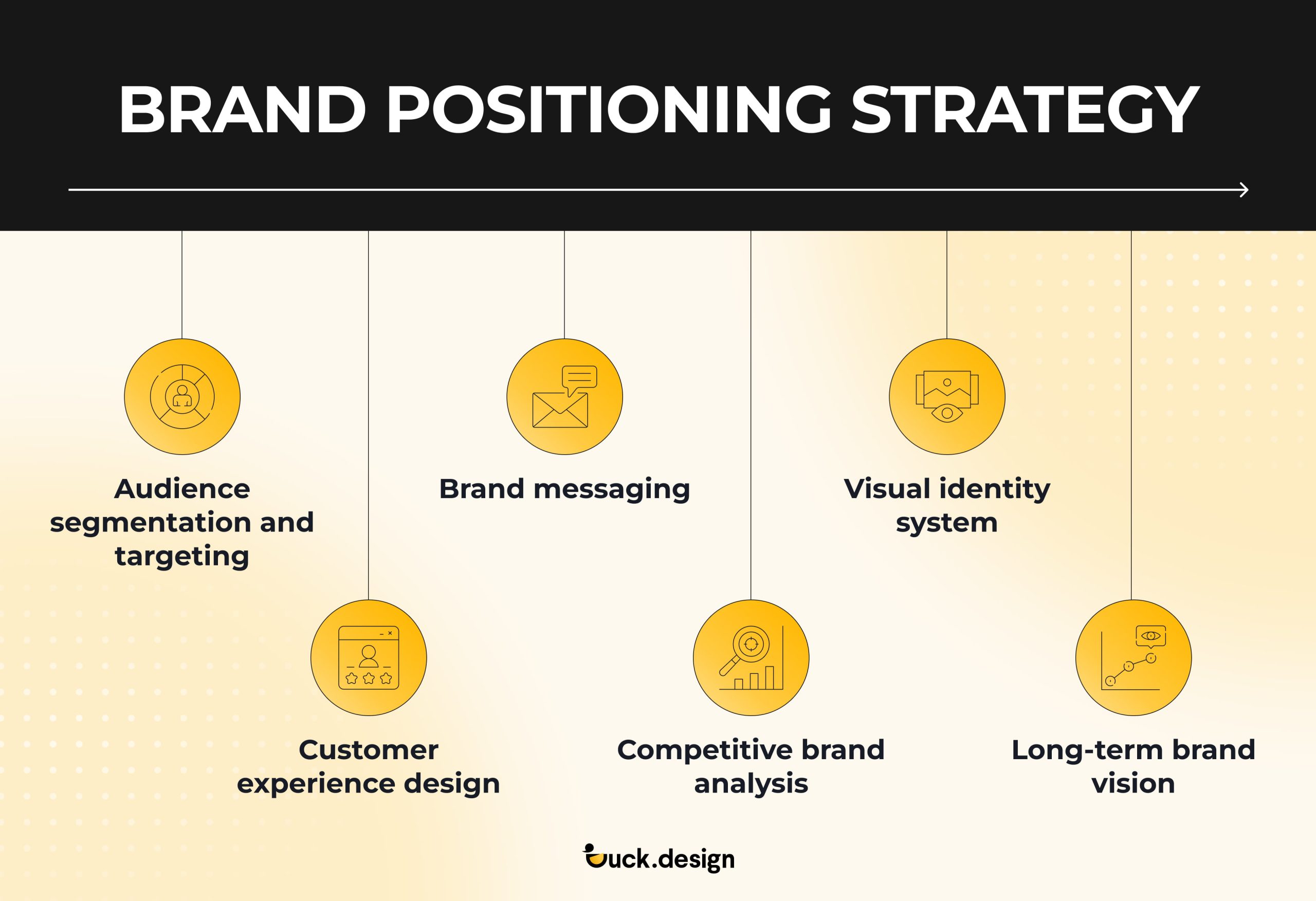
A brand strategy includes:
- Brand positioning strategy. Defines where your brand sits in the market and what makes it different from competitors. It’s how you claim space in your customer’s mind — clearly and confidently.
- Audience segmentation and targeting. Identifies your ideal customer profiles (ICPs), breaks down their expectations, and creates messages that resonate. This element ensures that your efforts are aligned with the users real needs.
- Brand messaging. Shapes the tone, voice, and language your brand uses across all touchpoints — from your landing page to customer emails. It keeps your communication sharp and consistent.
- Visual identity system. Includes your logo, color palette, typography, icons, and image direction. But it’s more than aesthetics — it’s how people instantly recognize and remember your brand.
- Customer experience design. Covers every interaction (social, digital, in-product, and support), ensuring your brand feels cohesive across all brand touchpoints.
- Competitive brand analysis. Assesses the market to identify possibilities, gaps, and places where one may stand out without copying what is already there.
- Long-term brand vision. Keeps your strategy scalable. Every piece of work (campaigns, assets, UI) supports your evolving business goals.
A strong brand strategy helps you earn trust — and keep it. Most people (90%) say they stick with brands they trust, and 72% feel loyal to at least one. Design plays a big role in that. About three out of four shoppers say things like packaging and visual style affect what they buy. That’s how good branding turns one-time buyers into long-term fans.
Preparing for a Successful Brand Strategy: Essential Pre-Launch Steps
Before building a brand strategy, your team must decide on the brand’s definition, target audience, and direction. Here’s your to do list:
- Define your core brand purpose. Why do you exist beyond making money? You need a mission that’s real and a vision that scales. This anchors the entire strategy.
- Get specific about your audience. Not just demographics. You need behaviors, values, and pain points. Know what they care about so you can speak their language.
- Map your competitive brand landscape. Look at who’s already in your space. What are they doing well? Where are they weak? This is your competitive analysis. You’ll find your edge in the gaps they ignore.
- Articulate your brand positioning. Define what you offer, how you’re different, and why that difference matters.
- Clarify your brand voice and personality. How should your brand sound? Casual? Strategic? Bold?
- Set your long-term vision. Think beyond the next launch. Where’s your brand going in the next 3–5 years?
By checking these boxes first, you’re building a brand strategy that lasts.
Key Stages of Brand Strategy

A strategy isn’t built in one sitting. It’s developed in deliberate stages — each one shaping how people see, feel, and remember your brand.
Here’s how to develop a brand strategy:
1. Analyze Your Potential Audience
You can’t create a message, mood, or visual system if you don’t know who it’s meant to connect with. Audience analysis isn’t just age and job titles. You need to dig into their values, buying behaviors, fears, and what drives their decision-making.
Break them into segments. Map their journey across your brand touchpoints. For SaaS teams, that might mean onboarding flows. For DTC brands, that’s your first ad impression all the way to checkout. Each step must feel like it’s created for them, because it is.
This is the basis of solid user-centered design, making your entire identity revolve around the people you’re serving, rather than your internal ideas.
2. Align Visual Style with Your Brand Voice and Message
Your tone and visual system need to work as one.
For example, if your message is strong and striking, your design demands bold typography, strong contrast colors, and tight compositions. And if your tone is warm and friendly, think smooth colors, open space, and soft typefaces.
This alignment is essential for developing consistent, scalable marketing design. Every asset — from paid ads and advertising design to landing pages, product packaging, and email banners — needs to feel like it came from the same source. That’s how brand recall is built.
This way, you make it easier for users to recognize and trust your brand wherever they encounter it — on Instagram, in their inbox, or during checkout.
3. Develop a Cohesive Visual System (colors, type, icons)
Define clear rules for color use, typography, layout spacing, icon style, image treatment, and even how motion behaves. Everything must feel connected.
A fully developed visual system is essential for modern brand design, especially when different teams or vendors need to build fast and stay on-brand without reinventing the wheel.
It’s also what makes your identity scalable — a key requirement for any growing company. This stage turns abstract ideas into clear visualization, enabling faster decision-making and brand recognition at every customer touchpoint.
4. Utilize Real Photos And Visuals To Showcase Who You Are
People want to see the real brand behind the pixels. That means using authentic visuals — team shots, founder stories, real customers, or product photos in context, not stock filler.
Why? It creates an emotional connection. Visuals like these enhance brand storytelling by showing, not telling, what your company values. If you’re high-end, your photos should feel refined. If you’re community-driven, you should show your people, not polished studio setups.
[Get a Custom Identity Plan
5. Don’t Blindly Copy Your Competitors’ Strategy
Your competitive brand analysis should uncover what others do well — and what they overlook. Those blind spots are your biggest opportunities. Instead of chasing the same look and language, define your own territory with a distinct voice, tone, and visual patterns.
This is where your brand positioning strategy earns its place. Stand for something clear. And design it in a way that only you can.
6. Design for Multi-Channel Branding from Day One
Leading brands use brand experience design to get every touchpoint to feel on purpose and emotionally connected. Your brand lives in DMs, pitch decks, emails, TikToks, unboxings, and app screens — all at once. Each interaction is a chance to strengthen recognition or confuse it. That’s why you need consistency across all touchpoints.
This consistency brings awareness, trust, and ultimately brand loyalty. If humans feel like they’re communicating with the same personality via your website, packaging, support emails, and Instagram feed, they stick around.
In order to make your brand stick, your visual identity, brand message, and tone must be consistent, yet flexible, across channels. This is the secret to multi-channel branding — showing up with clarity and recognition wherever your audience engages with you.
However, to reach that stage of coverage and reliability, there is more to it than possessing good-looking assets. You need a well-built digital branding system that supports personalization at scale — one that combines consistent design, voice, and storytelling across all your digital environments.
Measuring the Effectiveness of Your Brand Strategy After Launch
After a strategy has been activated, it requires pressure testing. You need to gauge whether your branding is generating visibility, creating loyalty, and encouraging conversions.

Here’s how to do it:
1. Measure Brand Awareness Growth
Start by evaluating reach. Use platforms like Google Trends and Ahrefs to monitor branded search volume changes. Track rises in direct traffic and search visibility.
Track brand mentions on social media using platforms like Brand24 or Mention. These tools show if your brand is gaining traction or being overlooked.
Building brand awareness is the first outward indicator that your strategy is taking hold and generating real-world interest.
2. Evaluate Engagement at Brand Touchpoints
Track how your audience interacts with your brand across digital channels. Use Google Analytics, Hotjar, and Sprout Social to collect data on:
- Average session duration
- Scroll depth
- Social engagement rates
- Email open and click-through rates
If your multi-channel branding is cohesive, performance will reflect it. Consistent brand engagement means your brand messaging is landing well.
3. Run Brand Perception Surveys
Brand sentiment must align with your intent. Conduct quarterly surveys using tools like SurveyMonkey or Wynter. Ask customers and prospects how they perceive your brand value proposition and identity.
If their language doesn’t match your positioning, you need to refine your visual and verbal strategy. This step gives you a clear view into brand perception, which influences long-term success.
4. Track Retention and Loyalty Metrics
Effective strategic brand management creates loyal customers, not just one-time buyers. Use tools like Mixpanel, HubSpot, or NPS platforms to measure:
- Repeat purchases or subscriptions
- Referral activity
- Churn rate
- Net Promoter Score
These indicators reflect the emotional and practical impact of your branding strategy. A loyal base signals a solid brand strategy development framework.
5. Audit Visual Consistency
Check for consistency across all assets—social posts, packaging, emails, presentations. Inconsistencies dilute recognition and trust.
Use platforms like Brandfolder or Frontify to maintain alignment with your original brand identity design — including logo use, color application, typography, and imagery — so that every asset reflects the same standards and reinforces brand recognition.
6. Track Conversion Attribution
Go beyond basic traffic numbers. Use attribution software like GA4, HubSpot, and Segment to identify the branded touchpoints that actually generate conversions, not necessarily engagement.
Whether it’s a product packaging, email banner, or landing page, attribution data will inform you as to what drives the pipeline and what doesn’t.
This understanding brings visual identity and messaging back to performance so that you can scale what works and cut what doesn’t.
Understanding attribution helps connect your branding elements to real business outcomes.
Talk to a Brand Design Expert
7. Schedule Strategic Reviews
Review your strategy quarterly. Pull data across tools, assess feedback, and determine if your long-term vision is still aligned with market shifts.
Regular reviews allow for strategic updates—whether that means refining your brand positioning strategy, adjusting tone, or scaling your scalable brand solutions into new markets.
Brand Strategy Performance Tracker
| Goal | Tools | What to Track |
| Brand Awareness | Google Trends, Mention, Ahrefs | Search volume, social mentions, and backlinks |
| Engagement | GA4, Hotjar, Sprout Social | Time on page, CTR, scroll depth |
| Perception | Wynter, SurveyMonkey, Typeform | Language alignment, sentiment, trust scores |
| Loyalty & Retention | Mixpanel, HubSpot, NPS Tools | Repeat visits, referrals, churn, satisfaction |
| Visual Consistency | Frontify, Brandfolder | Cohesion across visuals and touchpoints |
| Attribution | GA4, Segment, HubSpot | Conversion paths, creative ROI, lead sources |
Examples of Developing Working Brand Strategies
We don’t just talk about brand strategy. We build it.
What follows isn’t theory or guesswork — these are real-world brand transformations delivered by Duck.Design. In each case, we crafted and executed a tailored brand strategy through visuals, combining identity, UX, messaging, and scalable systems that actually drive results.
1. Anything SPF – Inclusive Brand Strategy for Skincare

Anything SPF came to us with one mission: make sun protection feel inclusive, accessible, and human. The brand already had the values—what they lacked was a system to make people feel those values across every touchpoint.
We started with foundational work:
- Created a warm, retro-inspired visual identity to convey optimism, care, and diversity.
- Developed custom packaging design that stood out on shelves while still signaling modern skincare credibility.
- Built a user-first interface with clear navigation, mobile-first logic, and intuitive UX to reflect the brand’s daily-use ethos.
✅Key strategy: Focus on storytelling through emotional design. We didn’t just sell a product—we framed sun protection as a feel-good ritual for all skin tones and genders.
📈Results:
- 70% increase in brand recognition
- 50% rise in user reviews within 3 months
- 89% satisfaction rate
2. LUMARA – Brand Strategy at the Intersection of Real Estate and Crypto

LUMARA needed more than design polish — they needed clarity. Their platform allows verified users to buy and sell real estate using cryptocurrency. The challenge? Build trust in an untraditional model.
We implemented a brand strategy rooted in simplicity and professionalism, focusing on clean lines, bold whitespace, and restrained color. Our team:
- Created a brand identity that balanced the futuristic tone of crypto with the grounded aesthetics of luxury real estate.
- Designed a UX that shortened the onboarding process and emphasized user qualification and platform security.
- Aligned messaging with LUMARA’s long-term brand vision, positioning them as pioneers in an emerging space.
✅Key strategy: We treated their platform as a digital brand flagship, where credibility is won or lost in milliseconds.
📈Results:
- 70% uplift in brand recognition
- Over 5,000 new verified users in the first three months
- 89% satisfaction rate
3. Newstats – Turning Complexity Into Clarity With Brand Design

Newstats processes 750k+ news articles a day using advanced AI. The product was powerful, but the experience was chaotic. They needed a cohesive branding strategy to translate complexity into clarity and build user loyalty.
Here’s how we approached it:
- Crafted a unified visual system to convey credibility and structure—think data dashboards meets editorial calm.
- Used smart brand identity design to drive hierarchy and help users digest information at a glance.
- Optimized for mobile with adaptive design patterns, cutting clutter, and elevating readability.
✅Key strategy: Build brand value proposition directly into the interface. Let the design communicate usefulness before a single line of copy is read.
📈Results:
- 35% increase in average session time (6 min per user)
- Bounce rate dropped from 60% to 45%
- 25% increase in registrations and 30% boost in newsletter signups
- 50% more page views per session
- 40% rise in mobile visits
Want to Create a Memorable Brand Identity? Duck.Design Has You Covered 100%
Building brand strategy isn’t guesswork — it’s a business tool. One that influences how you’re seen, remembered, and chosen. At Duck.Design, we craft full-spectrum brand identity systems that don’t just look sharp — they’re built to grow your business.
With our brand identity design services, you get:
- Strategic visual systems tailored to your audience
- Logos, typography, colors, and brand guidelines that scale across channels
- Messaging that supports differentiation, trust, and conversion
Our flat-rate subscription plans let you move fast — unlimited design requests, real collaboration, and consistent output. No hourly rates, no waiting.
And when your brand grows, we scale with you. We also offer:
- Web and UI/UX design
- Motion graphics and illustration
- Print and packaging design
- No-code development and full creative support
We’ve helped over 400 brands scale design without scaling teams. And we’re ready to help you do the same.